
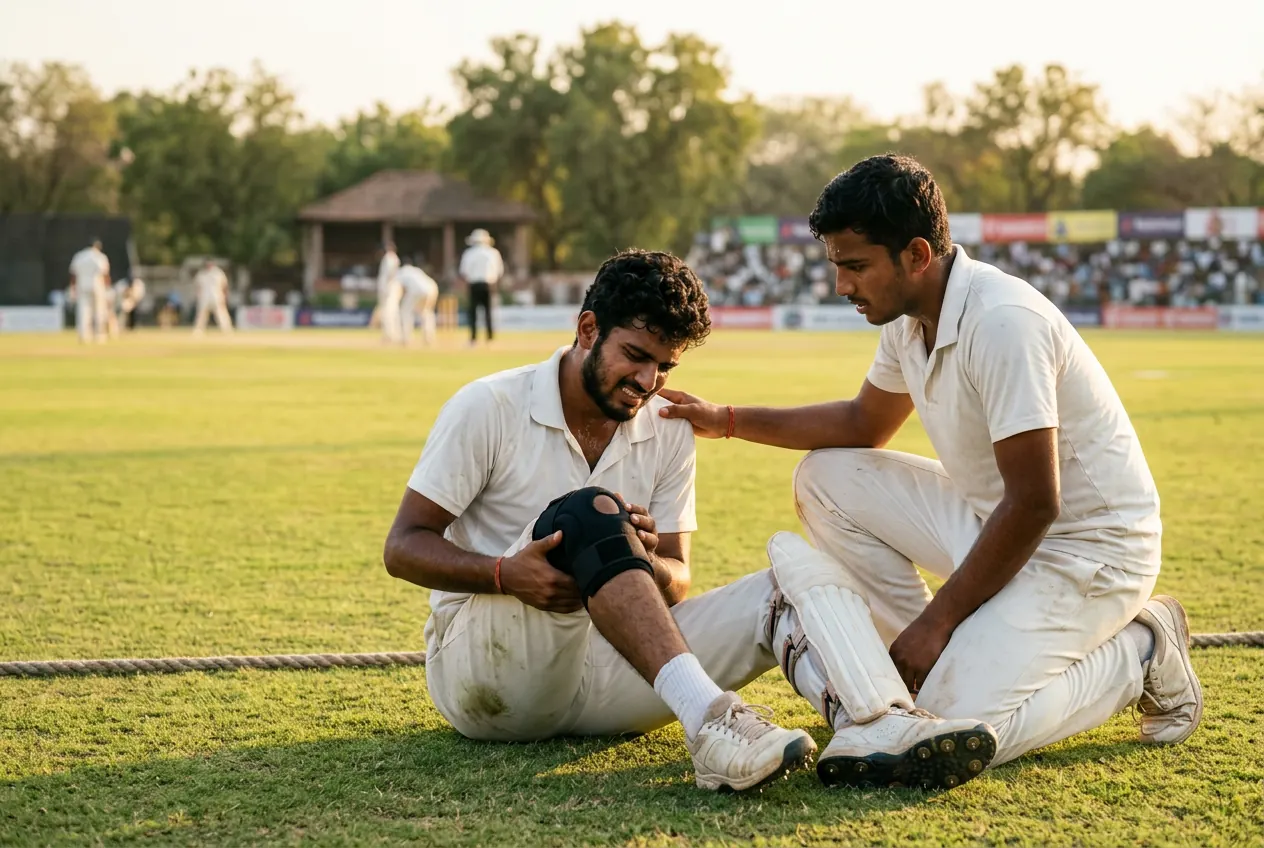
When should you see a knee specialist?
You should see a knee specialist if knee pain, swelling or instability lasts more than a few days after an injury, or if it keeps returning. Warning signs include a popping sound at the time of injury, the knee giving way on turning, locking or catching, a kneecap that slips out of place, and a knee that will not fully straighten or bend.
Early assessment matters because some injuries, such as certain meniscus tears, are more likely to be repairable when treated sooner, and an unstable knee can damage cartilage over time.
Knee conditions treated
Each condition below has its own page with more detail on symptoms, assessment and treatment.
- ACL, PCL, MCL and LCL ligament injuries: from bracing and rehabilitation to arthroscopic ligament reconstruction.
- Meniscus tears: physiotherapy-led care, arthroscopic repair, or trimming of the torn part when repair is not possible.
- Recurrent patella dislocation: kneecap instability managed with strengthening or procedures such as MPFL reconstruction.
- Cartilage-related disorders: focal cartilage and bone defects treated with options such as microfracture or cartilage grafting.
- Stiff knee: loss of movement after injury or surgery, including arthrofibrosis.
- Bent knee (flexion deformity): a knee that cannot fully straighten.
- Knee joint preservation and HTO: realignment surgery for selected younger patients with early arthritis on one side of the knee.
How is a knee problem assessed?
Assessment begins with how the problem started and how it affects your daily life, work and sport. A focused examination tests ligament stability, the meniscus, kneecap tracking, alignment and range of movement. X-rays show bone and alignment; MRI is used when soft-tissue injury needs to be confirmed or graded.
Many knee problems settle with structured physiotherapy and activity changes. Surgery is discussed when symptoms persist, the knee is mechanically unstable or locked, or the injury is unlikely to heal on its own. Most ligament, meniscus and cartilage procedures are performed by arthroscopy, a keyhole technique using a camera and small incisions.
Is knee replacement covered here?
No. This section focuses on injuries and joint-preserving care. If advanced arthritis has worn out the joint, see the separate page on total and revision knee replacement, or the page on partial knee replacement when damage is limited to one compartment.
Training and consultation locations
Dr. Panchal completed his M.S. (Orthopaedics) at B.J. Medical College and Civil Hospital, Ahmedabad, followed by fellowships in advanced arthroscopy and sports medicine at St. Mary's Hospital, Daejeon, South Korea and Hinduja Hospital, Mumbai, and in primary and revision arthroplasty at Bombay Hospital, Mumbai. His areas of interest include sports injuries, cartilage repair and complex multi-ligament injuries.
Consultations are at Empire Hospital, Sola and Epic Multispecialty Hospital, Thaltej, Ahmedabad.
Frequently asked questions
Do I need an MRI before my first visit?
Not usually. An MRI is advised after examination if it will change the treatment plan. Bring any existing scans and reports.
Can a knee ligament or meniscus injury heal without surgery?
Some can. Partial ligament injuries, MCL injuries and certain meniscus tears often improve with rehabilitation. Suitability depends on the injury pattern and your activity goals.
When should I go to an emergency department?
Go to the nearest emergency department if you cannot bear weight, the knee looks deformed, the leg becomes numb or cold, or a hot, swollen knee comes with fever.
This page offers general information. The right treatment depends on your examination, imaging and personal goals. Request a consultation to discuss your situation with Dr. Karnav Panchal.