
Who may be a candidate for knee replacement?
You may be a candidate if knee arthritis causes significant pain and loss of function that has not improved with medicines, physiotherapy, weight management or injections. Common features include:
- Pain that limits walking, stairs or sleep
- Stiffness, swelling or a knee that gives way
- Visible bowing or knock-knee deformity
- X-rays showing advanced joint-space loss
X-ray appearance alone does not decide the need for surgery. The decision depends on how symptoms affect your life and on your general health. Our article on when knee replacement surgery is needed explains this in more detail.
Primary total knee replacement
Primary knee replacement is the first replacement of a natural knee. Through an incision at the front of the knee, the damaged surfaces are shaped and covered with an implant: a metal femoral component, a metal tibial base with a medical-grade plastic insert, and sometimes a patellar (kneecap) button. The aim is to reduce pain, correct deformity and restore a stable, functional range of movement. Surgery is done under spinal or general anaesthesia, as advised by the anaesthetist.
Revision knee replacement
Revision knee replacement replaces part or all of an earlier implant. Reasons include wear of the plastic insert, loosening, instability, infection, fracture around the implant or persistent stiffness. Revision is usually more complex than a first operation and may need special implants, bone grafts or a staged approach for infection. Dr. Panchal’s fellowship training covered both primary and revision arthroplasty. The article on when a knee replacement might need revision describes warning signs.
Partial or total knee replacement?
If arthritis is limited to one compartment and the ligaments are intact, a partial (unicondylar) knee replacement may be an option. When damage affects more than one compartment or there is marked deformity, total knee replacement is generally preferred.
Preparing for surgery
- Blood tests, ECG and a medical fitness check; diabetes and blood pressure should be well controlled
- Review of your medicines, especially blood thinners, with your doctors
- Treating any skin, dental or urinary infection beforehand
- Pre-operative exercises and arranging help and a safe home for the first weeks
Hospital stay and rehabilitation
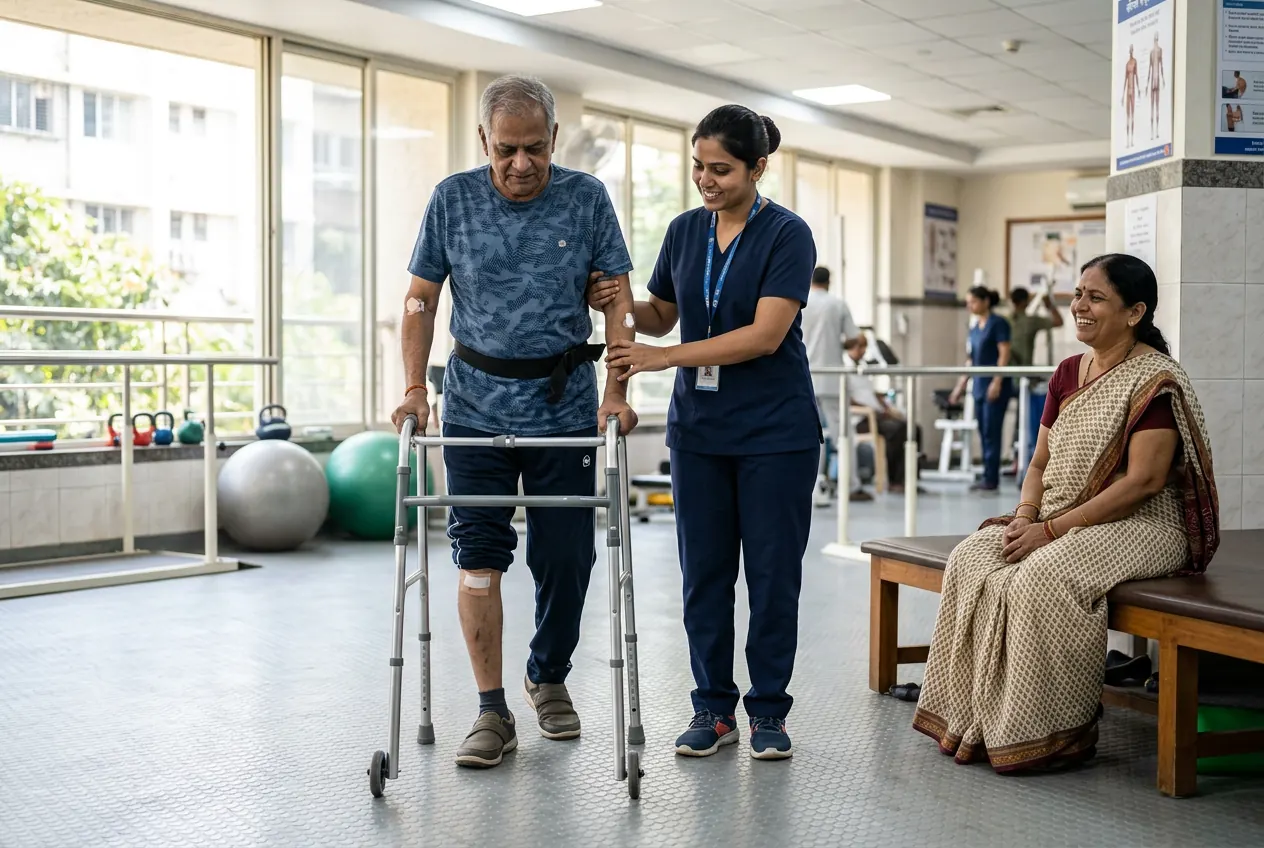
Most patients begin standing and walking with a walker within a day or two of surgery, guided by a physiotherapist. A hospital stay of a few days is common, though this varies. Over the following weeks you progress to a stick and then independent walking. Many people return to routine daily activities in roughly six to twelve weeks, while swelling and strength continue to improve for several months. These are typical ranges, not promises. Read more in knee replacement recovery: what to expect.
Risks of knee replacement
Knee replacement is a major operation. Possible complications include infection, blood clots in the leg or lungs, wound problems, stiffness, persistent pain, nerve or vessel injury, instability, implant loosening and the need for revision. Medical risks related to anaesthesia and existing illnesses also apply. Your individual risks are discussed before surgery.
Who is a Patient for Knee Replacement?
You may be a good candidate for primary or revision knee replacement if you experience:
- Chronic knee pain affecting daily life
- Difficulty in walking, standing, or climbing stairs
- Swelling or stiffness in the knee
- No relief from medications or conservative therapies
- A failed previous knee replacement
More about Total Knee Replacement Surgery in Ahmedabad
Restore Mobility. Relieve Pain. Reclaim Your Life.
If knee pain is limiting your lifestyle, it’s time to consider a long-term solution. Dr. Karnav Panchal, a highly experienced and trusted orthopedic surgeon in Ahmedabad, offers comprehensive care for Primary and Revision Total Knee Replacement Surgery, delivering lasting relief and restored mobility to patients across Gujarat and beyond.
What is Total Knee Replacement?
Total Knee Replacement (TKR), also known as Total Knee Arthroplasty, is a surgical procedure where a damaged or worn-out knee joint is replaced with an artificial implant. It is typically recommended for patients suffering from severe arthritis, trauma, or chronic joint degeneration that does not respond to medications, injections, or physical therapy.
Dr. Karnav Panchal specializes in minimally invasive knee replacement surgery, which allows for faster recovery, less pain, and improved joint function.
Primary Total Knee Replacement
A Primary Total Knee Replacement is the first-time surgical replacement of a knee joint. It is commonly advised for:
- Osteoarthritis
- Rheumatoid Arthritis
- Post-Traumatic Arthritis
- Knee joint deformity or degeneration
With advanced techniques and personalized care, Dr. Karnav Panchal ensures optimal alignment, precision, and long-lasting results for patients undergoing knee replacement surgery in Ahmedabad.
Revision Total Knee Replacement
A Revision Knee Replacement is a more complex procedure, done when the original knee replacement has failed due to:
- Implant wear or loosening
- Infection
- Joint instability
- Stiffness or persistent pain
Dr. Karnav Panchal has extensive experience in revision knee surgeries in Ahmedabad, using advanced diagnostics and cutting-edge implants to correct failed knee replacements and improve patient outcomes.
Regain Pain-Free Movement with Advanced Knee Replacement Surgery
Struggling with chronic knee pain or a failed knee implant? Whether you need your first knee replacement or a corrective revision surgery, trust Dr. Karnav Panchal — a leading orthopedic surgeon in Ahmedabad with expertise in joint replacement and revision knee surgeries.
With a patient-first approach and a track record of successful outcomes, Dr. Panchal offers state-of-the-art Total Knee Replacement (TKR) procedures tailored to your unique condition, lifestyle, and recovery goals.
Why Choose Dr. Karnav Panchal for Knee Replacement in Ahmedabad?
Over a decade of orthopedic surgical experience
Specialized in joint replacement and complex revision cases
Use of advanced surgical techniques and high-performance implants
Faster recovery with enhanced post-operative care
Dedicated physiotherapy and rehabilitation support
1000+ successful knee replacement surgeries
State-of-the-Art Facilities & Personalized Care
Dr. Karnav Panchal consults and operates at some of the top orthopedic hospitals in Ahmedabad, equipped with:
- Modern Operation Theatres
- Computer-assisted surgical technology
- Infection-controlled environments
- Patient-first, compassionate approach
Who is a Patient for Knee Replacement?
You may be a good candidate for primary or revision knee replacement if you experience:
- Chronic knee pain affecting daily life
- Difficulty in walking, standing, or climbing stairs
- Swelling or stiffness in the knee
- No relief from medications or conservative therapies
- A failed previous knee replacement
Dr. Karnav Panchal offers a detailed consultation, diagnostic imaging, and personalized surgical planning to help you make an informed decision.
Expertise in Advanced Techniques
- Minimally Invasive Knee Replacement
- Computer-Navigated Surgery
- Custom Implant Selection
- Bilateral (Both Knees) Replacement
- Revision and Complex Reconstructions
Serving Patients Across Ahmedabad & Gujarat
Patients from across Ahmedabad, Gujarat, Rajasthan, and Maharashtra trust Dr. Karnav Panchal for expert care in joint replacement surgery. Whether it’s your first surgery or a revision procedure, you’ll receive compassionate, world-class treatment.
Frequently asked questions
How long does a knee replacement last?
Modern implants can last 15–20 years or more depending on patient activity and weight.
What does knee replacement cost?
The cost depends on the hospital, the type of implant, the length of stay and your medical needs. Please contact the clinic for an individual estimate after assessment.
Can both knees be replaced at the same time?
In selected healthy patients both knees may be replaced in one sitting or in stages. This depends on your overall fitness and is decided after assessment.
Will I be able to kneel or squat afterwards?
Some patients can kneel with discomfort, but deep squatting and sitting cross-legged are generally not advised after knee replacement.
What’s the recovery time for primary knee replacement?
Most patients walk within a day and resume normal activities within 4–6 weeks.
Is revision knee surgery more painful?
It can involve a longer recovery, but with proper care, most patients regain good function and pain relief.
This page offers general information. The right treatment depends on your examination, imaging and personal goals. Request a consultation to discuss your situation with Dr. Karnav Panchal.