
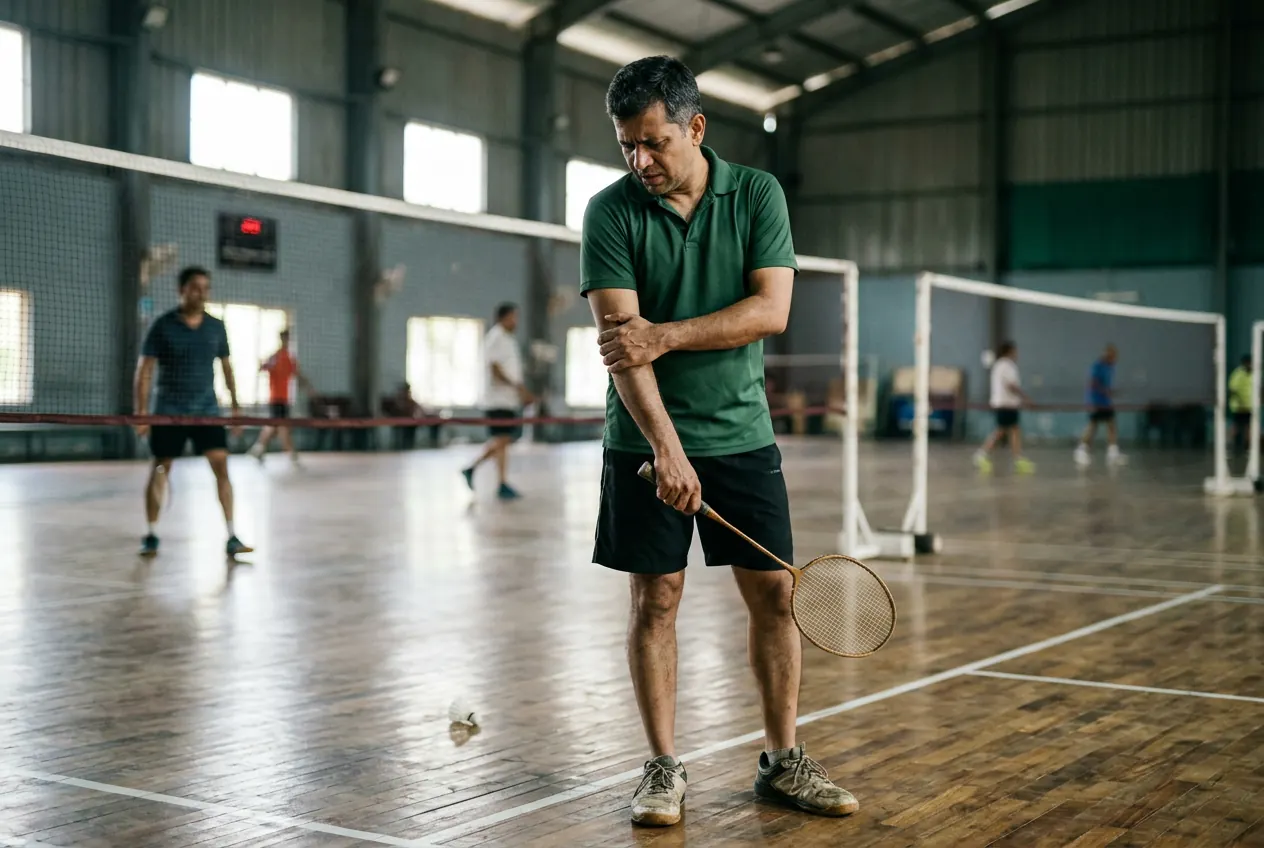
Who may benefit from elbow replacement?
Elbow replacement may be considered for people whose elbow pain, stiffness or instability seriously limits daily tasks such as eating, dressing or personal care, and who have not improved with other treatment. The main groups are:
- Rheumatoid and other inflammatory arthritis that has destroyed the joint
- Post-traumatic arthritis after an earlier fracture or dislocation
- Complex distal humerus fractures in older adults, where poor bone quality or fragmentation makes reliable fixation with plates and screws unlikely
- Selected cases of severe osteoarthritis or failed earlier surgery
How the operation works
Through an incision at the back of the elbow, the damaged joint surfaces are removed and metal stems are fixed into the humerus and ulna, usually with bone cement. The stems are joined by a hinge that allows bending and straightening. Care is taken to protect the ulnar nerve, which runs close to the joint. The surgery is usually done under general or regional anaesthesia.
Lifting restrictions after elbow replacement
The most important point to understand before surgery is that an elbow replacement is designed for everyday activities, not heavy work. To reduce the risk of loosening or breakage, patients are generally advised to avoid lifting more than a few kilograms with the operated arm on a regular basis, and to avoid repetitive heavy lifting, impact activities and weight-bearing on the arm (such as pushing up from a chair) for life. This is one reason elbow replacement is usually reserved for lower-demand patients. Your surgeon will give you specific limits.
Alternatives to consider
Depending on the problem, alternatives may include medicines and joint protection, physiotherapy, arthroscopic or open release and debridement for stiffness, or fracture fixation with plates and screws in younger patients with good bone quality. Fracture care is described on our fracture and polytrauma management page.
Preparing for surgery
For patients with rheumatoid arthritis, preparation includes a review of disease-modifying and biological medicines with the rheumatologist, since some may need to be paused around surgery to lower the risk of infection. Neck X-rays are sometimes advised in long-standing rheumatoid arthritis before anaesthesia. Shoulder, wrist and hand function on the same side is also assessed, because it affects how well the new elbow can be used.
Recovery
The elbow is usually rested in a splint or dressing for a short time, followed by guided exercises to regain movement. Most patients can use the arm for light daily tasks within a few weeks. Recovery varies with the underlying condition and the patient’s overall health.
Risks
Possible complications include infection, wound healing problems, ulnar nerve irritation or injury, weakness of the triceps muscle, stiffness, loosening or wear of the implant, fracture and the need for revision surgery. These are discussed before consent.
When is Elbow Replacement Recommended?
- Dr. Karnav Panchal may recommend Total Elbow Replacement if you experience: Severe rheumatoid arthritis Post-traumatic arthritis following fractures or injuries Elbow joint deformities or stiffness Failed previous elbow surgeries Loss of elbow function affecting daily tasks like dressing or eating This procedure is especially beneficial for older adults, low-demand individuals, or those whose elbow degeneration is not manageable through conservative treatment.
- Severe rheumatoid arthritis
- Post-traumatic arthritis following fractures or injuries
- Elbow joint deformities or stiffness
- Failed previous elbow surgeries
- Loss of elbow function affecting daily tasks like dressing or eating
More about Total Elbow Replacement Surgery
Regain Strength, Flexibility & Function in Your Elbow
If you’re suffering from chronic elbow pain, limited movement, or severe arthritis that affects your daily activities, it may be time to consider Total Elbow Replacement. Dr. Karnav Panchal, a leading orthopedic and joint replacement surgeon in Ahmedabad, offers advanced elbow joint replacement solutions to help you live pain-free and restore functional independence.
What is Total Elbow Replacement?
Total Elbow Replacement, also called Elbow Arthroplasty, is a surgical procedure where the damaged or diseased parts of the elbow joint are replaced with metal and plastic implants that mimic natural joint movement. The goal is to relieve pain, restore motion, and improve arm function in patients with elbow joint damage due to arthritis, trauma, or failed prior surgeries.
Procedure Overview
During Total Elbow Replacement:
- The ends of the damaged humerus and ulna bones are removed.
- A metal and plastic hinge prosthesis is implanted into the bones.
- The components are connected with a hinge to allow stable and smooth elbow movement.
Dr. Karnav Panchal uses advanced surgical techniques and high-quality implants to ensure precise alignment, long-term durability, and optimal function.
Benefits of Elbow Replacement
Significant pain relief
Improved range of motion
Enhanced ability to perform daily activities
Long-lasting implant durability
Restored elbow stability and alignment
Faster recovery with dedicated post-op care
Why Choose Dr. Karnav Panchal for Total Elbow Replacement?
Specialized in upper limb joint replacements
Expertise in treating complex elbow arthritis & trauma
Over a decade of surgical experience
Access to modern operation theatres & advanced implants
Personalized physiotherapy & rehab programs
Trusted care by patients across Ahmedabad & Gujarat
Understanding the Procedure
Total Elbow Replacement is often less common than knee or hip replacements but plays a vital role for patients with:
- Chronic elbow joint destruction
- Restricted arm use due to pain or stiffness
- Failed fracture repairs or prior implants that are loose or worn out
The prosthesis mimics natural elbow movement through a hinge mechanism and provides functional support for everyday tasks like eating, writing, or dressing.
Serving Patients Across Ahmedabad & Gujarat
Dr. Karnav Panchal consults and operates at top orthopedic centers in Ahmedabad, offering expert care to patients from Gujarat, Rajasthan, Maharashtra, and beyond.
Who is a Candidate for Elbow Replacement?
- You may be a candidate for Total Elbow Arthroplasty if you have:
Severe pain in the elbow unresponsive to treatment
- Joint stiffness limiting function
- Rheumatoid or osteoarthritis of the elbow
- Complex fractures or bone loss
- Failed previous elbow surgeries or implants
Dr. Panchal conducts a detailed clinical exam and imaging analysis before recommending surgery.
Frequently asked questions
How much can I lift after elbow replacement?
Lifting is permanently limited, typically to light loads, and repetitive heavy lifting should be avoided. Your surgeon will advise exact limits for you.
Is elbow replacement suitable for young patients?
It is generally avoided in young, active patients because of the lifting limits and the risk of wear. Other treatments are usually considered first.
Will my elbow straighten fully after replacement?
Most patients gain a useful, functional arc of movement for daily tasks, but a small loss of full straightening is common. The result depends on stiffness before surgery and rehabilitation.
Can an elbow fracture be treated with replacement straight away?
In some older adults with complex distal humerus fractures and poor bone quality, primary elbow replacement may be considered instead of fixation.
How long does the surgery take?
Typically, the surgery takes 1.5 to 2 hours, depending on complexity.
What is the hospital stay duration?
Most patients stay for 2 to 3 days post-surgery for pain management and initial rehabilitation.
What activities can I resume after elbow replacement?
Most patients regain the ability to eat, write, dress, and perform other daily tasks. However, heavy lifting or high-impact activities are discouraged to preserve implant life.
How long do elbow implants last?
Elbow implants can last 10 to 15 years or more, especially when proper care is taken post-surgery.
What is Total Elbow Replacement?
It’s a surgical procedure where both sides of the elbow joint are replaced with a metal and plastic prosthesis to restore movement and eliminate pain.
This page offers general information. The right treatment depends on your examination, imaging and personal goals. Request a consultation to discuss your situation with Dr. Karnav Panchal.