
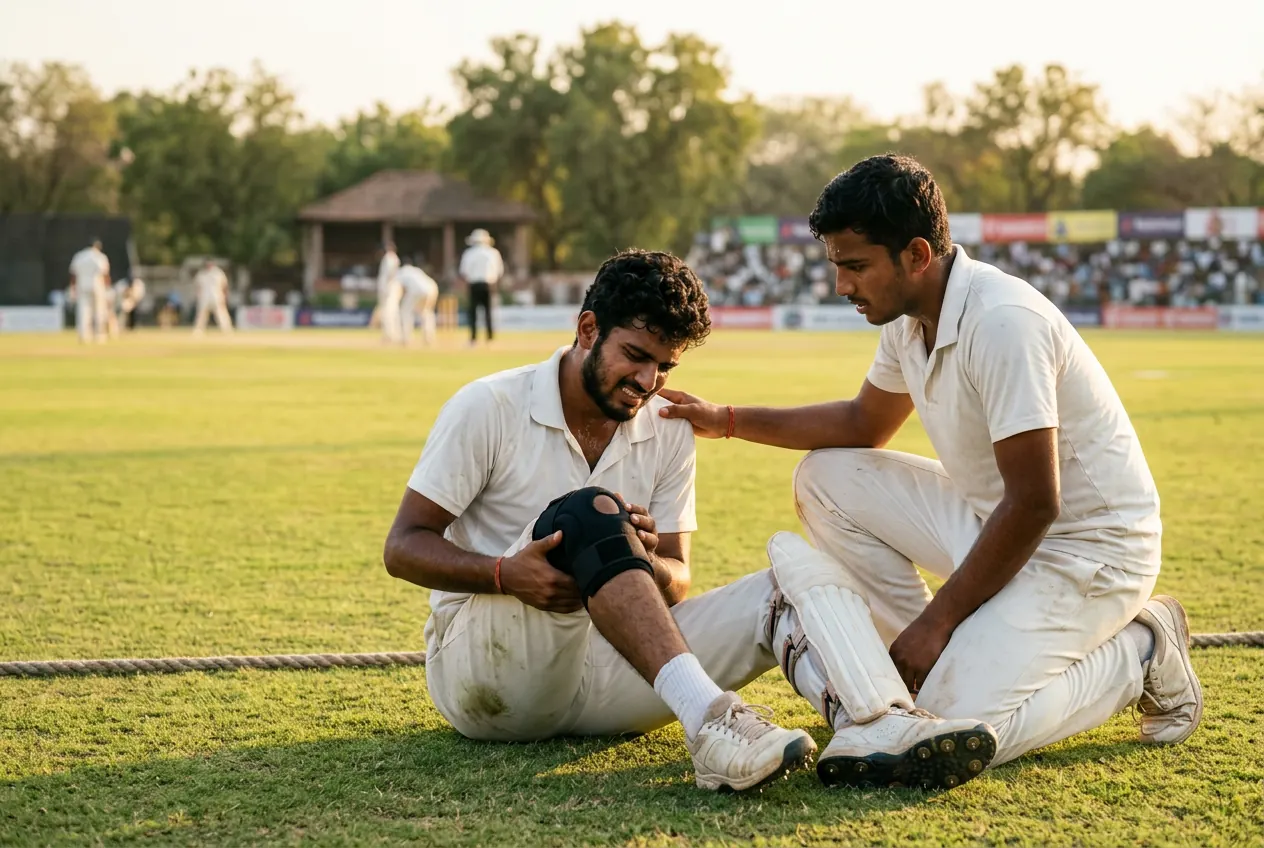
Why does the kneecap keep dislocating?
The kneecap keeps dislocating when the structures that hold it in its groove are weak, torn or shaped unfavourably. The first dislocation usually tears the medial patellofemoral ligament (MPFL), the main restraint on the inner side. Once it is torn, further dislocations become more likely.
Risk factors include:
- A shallow groove at the end of the thigh bone (trochlear dysplasia).
- A high-riding kneecap (patella alta).
- An outward pull from the position of the shin bone attachment of the patellar tendon.
- Generalised joint laxity, knock knees or rotational alignment of the leg.
Symptoms of patellar instability
A dislocation is often obvious: the kneecap shifts to the outer side, the knee bends and gives way, and it is very painful until the kneecap goes back into place. Between episodes, people often describe a feeling that the kneecap may slip, avoid twisting movements, and have pain at the front of the knee. Recurrent dislocations can chip the cartilage under the kneecap, which may cause loose fragments and catching.
How is it assessed?
Examination checks how far the kneecap moves sideways, how it tracks as the knee bends, overall leg alignment and joint laxity. X-rays show the shape of the groove and kneecap height. MRI shows the torn MPFL and any cartilage injury. CT is sometimes used to measure alignment precisely before surgery.
Non-surgical treatment
After a first dislocation without significant cartilage damage, non-surgical care is usually tried first. It includes a short period of protection, then physiotherapy focusing on the quadriceps, hip and core muscles, and a patellar brace or taping during sport. Many people do well, but those with several risk factors have a higher chance of further dislocation.
When is surgery considered?
Surgery is usually discussed after repeated dislocations, when instability limits daily life or sport, or when a cartilage fragment has broken off and needs fixing or removal.
MPFL reconstruction
The torn ligament is replaced with a tendon graft, often taken from the hamstrings, to restore the restraint on the inner side of the kneecap. In growing children, the technique is adapted to protect the growth plates.
Realignment procedures
When alignment problems are significant, MPFL reconstruction may be combined with a tibial tubercle osteotomy, which moves the bony attachment of the patellar tendon to improve tracking. Procedures to deepen a very shallow groove are reserved for selected cases.
Associated cartilage damage is addressed at the same time where possible; see cartilage-related disorders. Risks include stiffness, persistent pain, infection and, uncommonly, further instability.
Recovery
After MPFL reconstruction, people typically use a brace and crutches for some weeks, with a gradual rehabilitation programme. Return to sport often takes around four to six months, and longer when an osteotomy is added. These ranges vary between patients.
Kneecap instability is one of several conditions covered on the knee injuries page.
Living with an unstable kneecap
While waiting for treatment or during rehabilitation, a few practical steps can reduce the risk of another dislocation. Avoid sudden pivoting on a bent knee, take care on stairs and uneven ground, and warm up before exercise. A patellar stabilising brace may give confidence during sport. Keep up the strengthening programme, because muscle control is the knee's first line of defence. Note how many dislocations occur and in what situations; this history helps decide whether surgery is appropriate. Young athletes should discuss their training load with their coach and physiotherapist, as returning too quickly is a common cause of repeat episodes.
When to seek urgent care
If the kneecap stays out of place, or the knee cannot move after a dislocation, go to the nearest emergency department. Do not force it back in yourself.
Who is a Patient for Recurrent Patella Dislocation Treatment?
You may be a candidate if:
- Your kneecap dislocates more than once
- You feel the knee is unstable or frequently shifts
- You have had a previous dislocation and now suffer from chronic pain or weakness
- You want to return to sports or an active lifestyle safely
- Imaging (MRI/X-ray) shows MPFL tear, shallow groove, or misalignment
- You’ve tried conservative therapy but still face recurrent issues
More about Recurrent Patella Dislocation Treatment
Struggling with a Knee That Keeps Giving Out?
Recurrent Patella Dislocation occurs when your kneecap (patella) repeatedly slips out of place — causing pain, instability, and reduced confidence in movement. It commonly affects young athletes, active individuals, and those with previous patella injuries.
Dr. Karnav Panchal, a trusted orthopedic and sports injury specialist in Ahmedabad, offers advanced diagnosis and surgical correction for patellar instability, restoring joint stability and function with precision.
What is Recurrent Patella Dislocation?
The patella (kneecap) sits in a groove at the end of your thighbone (femur) and is supposed to glide smoothly during knee movement. In some individuals, the patella slips out of this groove, either partially (subluxation) or completely (dislocation). When this occurs more than once, it’s termed recurrent patellar dislocation.
Causes of Recurrent Patellar Dislocation
- Weak or torn medial patellofemoral ligament (MPFL)
- Shallow femoral groove (trochlear dysplasia)
- Tight lateral structures pulling patella outward
- Improper healing after a previous dislocation
- Ligament laxity or hypermobility
- Muscle imbalance around the knee
- Congenital knee deformities
Symptoms of Recurrent Patellar Dislocation
- Sensation of the kneecap shifting or slipping
- Pain on the front or outer side of the knee
- Swelling after activity or trauma
- Difficulty straightening the leg
- Instability during sports or walking
- Frequent dislocations even with minor twisting
- Cracking or grinding sensation (crepitus)
Expert Patellar Stabilization by Dr. Karnav Panchal
Dr. Karnav Panchal brings advanced knowledge in knee biomechanics and sports injury care. His approach includes:
- Accurate diagnosis with MRI & clinical evaluation
- Evaluation of ligament tears, bone alignment, and joint structure
- Minimally invasive arthroscopic procedures
- Personalized post-operative physiotherapy plans
- High success rate in stabilizing chronic dislocating knees
Non-Surgical Treatment
- Bracing to prevent lateral movement
- Physiotherapy to strengthen quadriceps & correct alignment
- Activity modification and pain management
Surgical Treatment
Recommended in recurrent or structural cases:
- MPFL Reconstruction – repairing or replacing the medial ligament
- Lateral Release – loosening tight outer structures
- Tibial Tubercle Transfer (TTT) – realigning the patella tracking
- Trochleoplasty – deepening the femoral groove (in severe cases)
Benefits of Surgery with Dr. Karnav Panchal
Customized surgical plan based on root cause
Arthroscopy-assisted minimally invasive approach
Enhanced knee stability and joint function
Reduced risk of future dislocations
Return to normal sports and daily activities
Expert rehab supervision post-surgery
Who is a Patient for Recurrent Patella Dislocation Treatment?
You may be a candidate if:
- Your kneecap dislocates more than once
- You feel the knee is unstable or frequently shifts
- You have had a previous dislocation and now suffer from chronic pain or weakness
- You want to return to sports or an active lifestyle safely
- Imaging (MRI/X-ray) shows MPFL tear, shallow groove, or misalignment
- You’ve tried conservative therapy but still face recurrent issues
Dr. Karnav Panchal will create a customized treatment plan based on your anatomy, injury history, and activity goals.
Treated at the Best Orthopedic Hospitals in Ahmedabad
Dr. Karnav Panchal performs patella stabilization surgeries at leading orthopedic centers equipped with:
- High-definition arthroscopy systems
- Advanced imaging and navigation tools
- Post-surgical physiotherapy units
- Infection-controlled surgical suites
Serving Patients Across Ahmedabad and Gujarat
Patients from Ahmedabad, Gandhinagar, Surat, Rajkot, Mehsana, Vadodara, and even from Rajasthan and Maharashtra, visit Dr. Panchal for high-quality hip replacement surgery.
Frequently asked questions
Will my child grow out of kneecap dislocations?
Some young people improve as their muscles strengthen, but those with shallow grooves or very loose joints often continue to dislocate. Assessment helps judge the risk.
Is MPFL reconstruction keyhole surgery?
It usually uses small incisions, often with an arthroscopy to inspect and treat the cartilage at the same time.
Can I play sport after treatment?
Many people return to sport after rehabilitation, but the timing depends on strength, control and the procedure performed.
Can I avoid surgery if my kneecap keeps dislocating?
Mild or first-time cases may be treated conservatively. Recurrent or structural instability usually requires surgical correction.
How long is recovery after surgery?
Most patients resume light activity in 4–6 weeks, and full sports activity in 3–6 months with guided rehabilitation.
Will I be able to play sports again?
Yes, most patients can return to high-level activity after full recovery, especially with physiotherapy and proper follow-up.
Is this condition common in teenagers?
Yes, adolescents and young adults are more prone to patellar dislocations, especially if they have hypermobility or anatomical variations.
What is MPFL reconstruction?
MPFL reconstruction is a procedure to rebuild the ligament that stabilizes your kneecap and prevents lateral dislocation.
This page offers general information. The right treatment depends on your examination, imaging and personal goals. Request a consultation to discuss your situation with Dr. Karnav Panchal.