
Awaiting medical review. This draft article is being reviewed by Dr. Karnav Panchal and is not yet indexed by search engines. It is general information, not medical advice.
What is the ACL?
The ACL is one of four main ligaments in the knee. It runs through the centre of the joint and stops the shin bone sliding forward and rotating too much under the thigh bone. It is especially important in sports that involve pivoting, cutting and jumping, such as football, cricket, kabaddi, basketball and badminton.
How does an ACL tear happen?
Most ACL tears happen without contact, when the foot is planted and the body twists, or when landing awkwardly from a jump. A direct blow to the knee can also tear it. ACL injuries often occur together with damage to the meniscus, cartilage or other ligaments.
What are the symptoms of an ACL tear?
- A pop or tearing sensation at the time of injury.
- Swelling within a few hours.
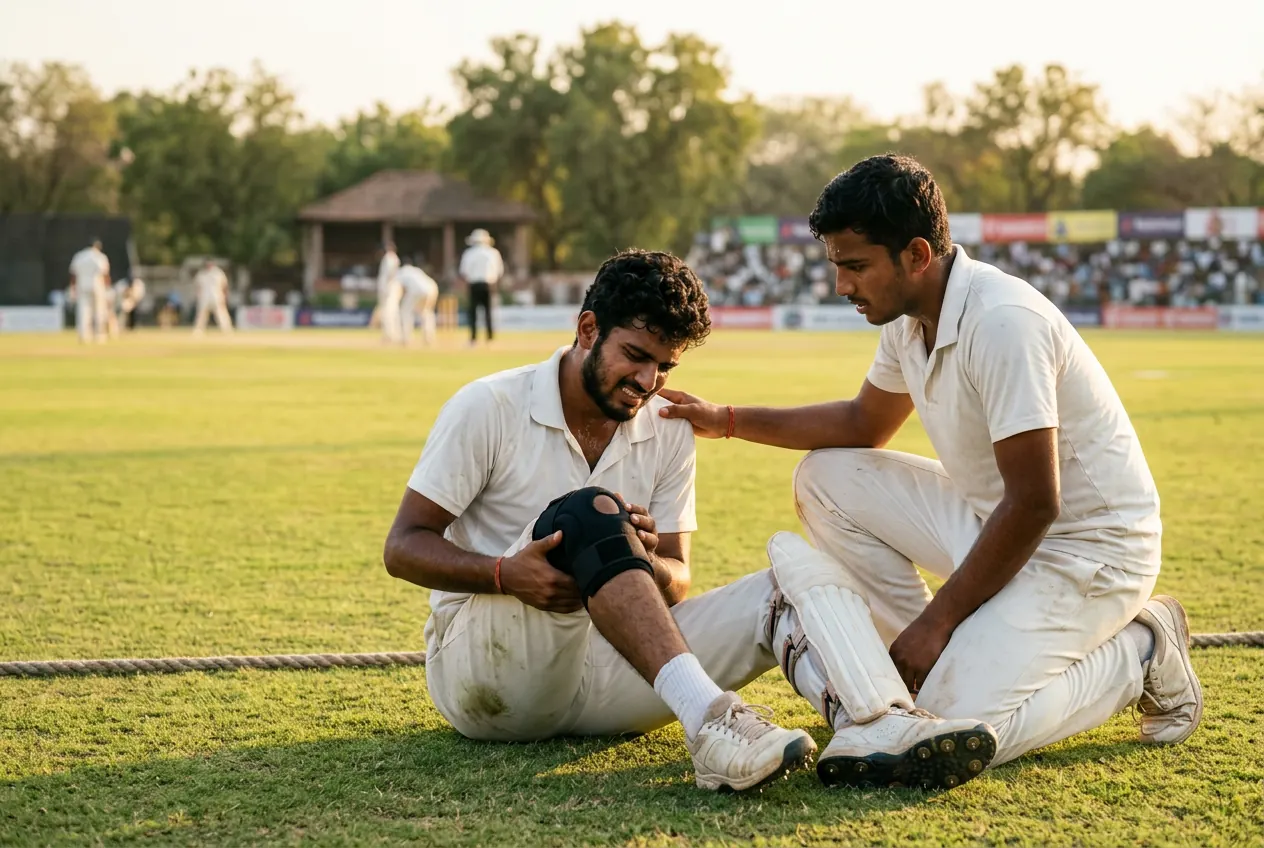
- Pain and difficulty continuing to play.
- A feeling that the knee is unstable or gives way, especially when turning.
- Reduced range of movement in the early days.
After the initial swelling settles, some people feel surprisingly normal walking in a straight line, but the knee may give way with turning or sport. Repeated giving way can damage the meniscus and cartilage.
How is an ACL tear diagnosed?
Diagnosis begins with the story of the injury and a careful examination. Specific tests check how much the shin bone moves forward and rotates. X-rays are used to rule out fractures. An MRI scan helps confirm the tear and identify associated injuries, such as a meniscus tear.
What are the treatment options?
Initial care
In the first days, rest, ice, compression, elevation and gentle movement help settle pain and swelling. Crutches may be used for comfort.
Rehabilitation without surgery
Some people, particularly those who do not play pivoting sports and whose knee feels stable in daily life, may do well with a structured physiotherapy programme. This focuses on strength, balance and control. Activity changes may be needed.
ACL reconstruction
Reconstruction replaces the torn ligament with a graft, usually taken from the patient's own tendons, and is performed by arthroscopy (keyhole surgery). It is often considered for people who want to return to pivoting sports, those with repeated giving way, and those with associated injuries that need repair. Rehabilitation afterwards is essential and takes several months; return to sport is decided by tests of strength and control rather than time alone.
How do you choose between rehabilitation and surgery?
The choice is personal and depends on several factors rather than the MRI report alone:
- Your activities: sports with sudden turns and jumps place high demands on the ACL.
- Symptoms: a knee that keeps giving way in daily life usually needs more than exercise alone.
- Associated injuries: a repairable meniscus tear may favour earlier surgery.
- Age and growth: in children with open growth plates, special techniques and careful planning are needed.
- Work and lifestyle: jobs involving ladders, uneven ground or heavy lifting may influence the decision.
Some people begin with rehabilitation and choose reconstruction later if instability persists. Whatever the plan, regaining full straightening, reducing swelling and rebuilding thigh strength before surgery is often advised, as this may help recovery afterwards.
What does rehabilitation look like?
Rehabilitation, with or without surgery, usually moves through stages. Early work focuses on settling swelling, restoring full straightening and switching the thigh muscles back on. Strength, balance and walking quality are then built up. Later stages add running, jumping, landing and changing direction, followed by sport-specific drills.
Return to sport is usually guided by testing strength, hop performance and confidence, not just the number of months since injury. Returning too early may increase the risk of re-injury. Injury-prevention exercises that train landing and cutting technique are worth continuing long term, and they may also help protect the other knee.
What are the risks of treatment?
Without surgery, there is a risk of ongoing instability and later damage to the meniscus and cartilage if the knee keeps giving way. Surgery carries risks such as infection, stiffness, blood clots, graft failure, re-injury and pain at the graft site. Your surgeon will help you weigh these against your goals, and you can take time to decide in most cases.
When should you seek help?
See an orthopaedic specialist if your knee swelled quickly after a twisting injury or feels unstable. Early assessment helps plan the right care.
When to seek urgent care: go to the nearest emergency department if the knee looks deformed, you cannot bear any weight, or you notice numbness, coldness or colour change in the foot.
Discuss your situation with Dr. Karnav Panchal for advice on ACL and knee ligament injuries.
Common questions
Can a torn ACL heal on its own?
A completely torn ACL usually does not heal back to its original function. However, some people regain a stable knee with physiotherapy and activity changes.
Can I walk with a torn ACL?
Many people can walk once the swelling settles, but the knee may give way with turning or twisting. Walking ability alone does not rule out a tear.
Should I wear a knee brace after an ACL tear?
A brace may be used for comfort or protection in some situations, but it does not replace rehabilitation. Your surgeon or physiotherapist will advise whether one is useful for you.
How long is recovery after ACL reconstruction?
Rehabilitation usually takes several months, and return to pivoting sport often takes longer. Timelines vary and depend on progress in strength and control.
Related treatment page: ACL & Knee Ligament Injuries. To talk about your own symptoms, request a consultation.