
Overview
This in-depth guide explains everything you need to know about shoulder dislocation, symptoms, causes, diagnosis, and the best treatment options available in Ahmedabad under the care of Dr. Karnav Panchal.
What is a Shoulder Dislocation?
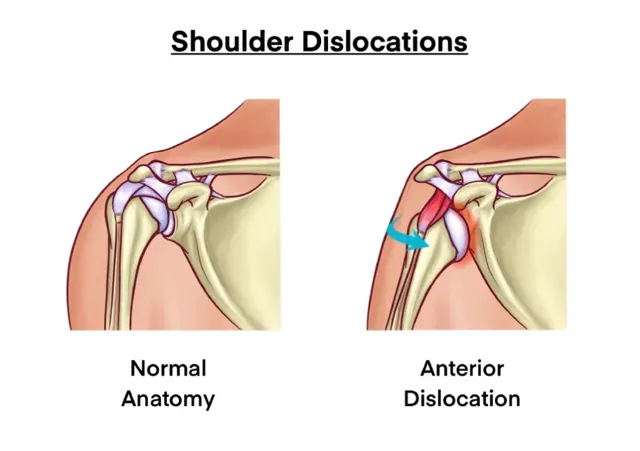
The shoulder joint is the most mobile joint in the human body, which makes it highly vulnerable to dislocation. A shoulder dislocation occurs when the upper arm bone (humerus) pops out of the socket (glenoid). This can happen due to:
- Sports injuries
- Falling on an outstretched arm
- Road traffic accidents
- Sudden force or impact
- Weak or loose shoulder ligaments
Shoulder dislocation is a serious injury and requires immediate medical care by an experienced orthopaedic doctor.
Why Choose Dr. Karnav Panchal for Shoulder Dislocation Treatment in Ahmedabad?
Expert in Shoulder Arthroscopy & Sports Injuries
Dr. Karnav Panchal is known for advanced shoulder arthroscopy and minimally invasive shoulder procedures.
Accurate Diagnosis Using Latest Technology
Uses world-class imaging tools, clinical evaluation, and special tests to diagnose the exact type of dislocation.
Customized Treatment for Each Patient
Every shoulder injury is different. Dr. Panchal designs personalized treatment plans based on age, activity level, and severity.
High Success Rate & Quick Recovery Protocols
Patients benefit from fast and safe recovery with modern physiotherapy support.
Trusted by Athletes & Working Professionals
Hundreds have returned to normal activity after undergoing shoulder dislocation treatment under his care.
If you are searching for “Best Doctor for Shoulder Dislocation in Ahmedabad”, “Shoulder Specialist in Gujarat”, or “Orthopaedic Surgeon for Shoulder Injury Near Me”, Dr. Karnav Panchal is one of the most reliable names.
Types of Shoulder Dislocation
Understanding the type of dislocation helps in choosing the right treatment.
1. Anterior Shoulder Dislocation (Most Common)
- Occurs when the shoulder moves forward out of the socket.
- Usually caused by sports injuries or falls.
2. Posterior Shoulder Dislocation
- Rare but more serious.
- Often seen after seizures or strong electric shocks.
3. Inferior Shoulder Dislocation
- Very uncommon.
- Occurs due to extreme upward pulling.
4. Recurrent Shoulder Dislocation
- Happens repeatedly, even with small movements.
- Common in younger patients and athletes.
- Requires expert treatment to stabilize the joint.
Common Causes of Shoulder Dislocation
People in Ahmedabad and Gujarat often experience shoulder dislocation due to:
- Falling from two-wheelers
- Garba or heavy movements during festivals
- Sports like cricket, kabaddi, volleyball, badminton, football
- Gym accidents
- Lifting heavy weights
- Slipping on stairs
- Age-related weakness or previous injury
Symptoms of Shoulder Dislocation
Severe shoulder pain
Visible deformity or abnormal shoulder shape
Swelling and bruising
Inability to move the arm
Numbness or tingling in the arm or fingers
If you notice these symptoms, visit an orthopaedic doctor in Ahmedabad immediately for proper treatment.
Diagnosis of Shoulder Dislocation
Dr. Karnav Panchal performs a detailed evaluation including:
1. Clinical Examination
Checks shoulder position, arm movement, swelling, and nerve function.
2. X-ray
Confirms the direction and severity of the dislocation.
3. MRI Scan
Helps identify associated injuries like:
- Labrum tear (Bankart lesion)
- Rotator cuff tear
- Ligament injuries
- Cartilage damage
Accurate diagnosis ensures proper treatment and avoids future complications.
Shoulder Dislocation Treatment in Ahmedabad by Dr. Karnav Panchal
Treatment depends on the severity of the injury, age, and activity level of the patient.
1. Closed Reduction (Nonsurgical Treatment)
Most first-time shoulder dislocations are treated with a procedure called closed reduction, where the doctor gently guides the bone back into the socket.
Benefits:
- Immediate pain relief
- No surgery required
- Quick procedure
- Safe and effective
This must be performed only by an expert orthopaedic surgeon to avoid nerve and ligament damage.
2. Immobilization
After reduction, the shoulder is kept in a sling or brace for 2–4 weeks to allow healing.
3. Medications
- Pain relievers
- Anti-inflammatory medicines
- Muscle relaxants
These help reduce pain and speed up recovery.
4. Physiotherapy & Rehabilitation
Physiotherapy is an essential part of shoulder dislocation treatment.
Dr. Panchal’s rehab plan focuses on:
✓ Restoring full movement ✓ Strengthening muscles ✓ Improving stability ✓ Preventing future dislocations
A structured physiotherapy program ensures safe and complete recovery.
Surgical Treatment for Shoulder Dislocation
Surgery is recommended in the following cases:
Recurrent shoulder dislocation
Severe ligament or labrum tear
Shoulder instability
Active athletes
Failed conservative treatment
Types of Shoulder Surgery Performed by Dr. Karnav Panchal
1. Arthroscopic Bankart Repair
Most common surgery for recurrent shoulder dislocation. The torn labrum is reattached arthroscopically to stabilize the shoulder.
2. Latarjet Procedure
Recommended for severe bone loss or repeated dislocations. Involves transferring a bone fragment to strengthen the joint.
3. Rotator Cuff Repair
If rotator cuff tear is present along with shoulder dislocation.
4. Capsular Tightening Surgery
Strengthens loose ligaments to prevent future instability.
All surgical procedures are minimally invasive, ensuring:
- Less pain
- Smaller scars
- Faster recovery
- Early return to work and sports
Recovery After Shoulder Dislocation Treatment
Recovery depends on the type of injury and treatment.
Nonsurgical Treatment:
4–8 weeks for complete recovery.
Arthroscopic Surgery:
2–3 months for routine activity 5–6 months for sports 6–8 months for heavy athletics
Dr. Karnav Panchal provides a personalized recovery plan for every patient.
How to Prevent Shoulder Dislocation?
- Strengthen shoulder and back muscles
- Avoid heavy movements without warm-up
- Use proper technique during sports
- Wear protective gear
- Follow physiotherapy exercises
- Avoid sudden jerks or falls
Why People in Ahmedabad/Gujarat Trust Dr. Karnav Panchal?
- Experienced shoulder specialist
- Advanced arthroscopic techniques
- Affordable treatment options
- Accurate diagnosis
- High success rate
- Patient-centric approach
Whether you are an athlete, office worker, senior citizen, or student, Dr. Panchal offers the most effective Shoulder Dislocation Treatment in Ahmedabad & Gujarat.
Conclusion
Shoulder dislocation is a painful and serious condition that requires expert medical attention. With advanced diagnostic tools, minimally invasive surgery options, and top-class physiotherapy support, Dr. Karnav Panchal provides comprehensive and effective shoulder dislocation treatment in Ahmedabad/Gujarat. If you or your loved one is suffering from shoulder pain, instability, or repeated dislocations, timely treatment can prevent future complications and ensure complete recovery.
Related treatment page: Shoulder dislocation Treatment In Ahmedabad/Gujarat. To talk about your own symptoms, request a consultation.