
Overview
If left untreated, a dislocated patella can lead to recurrent dislocations, knee instability, cartilage damage, and early arthritis. Fortunately, top orthopedic specialists in Ahmedabad and Gujarat provide advanced treatment options — both non-surgical and surgical — to restore knee function and prevent long-term complications.
This comprehensive guide will help you understand patella dislocation, its causes, symptoms, and treatment options available in Ahmedabad and Gujarat, including the best hospitals and specialists for care.
What is a Patella Dislocation?
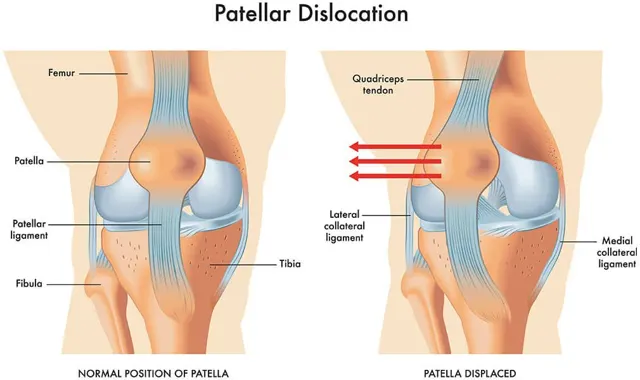
The patella normally moves along a groove on the thigh bone during knee bending and straightening. A patella dislocation occurs when the kneecap slides out of this groove, usually to the side of the knee.
Dislocations can be partial (subluxation), where the patella slips but returns spontaneously, or complete, where the kneecap moves entirely out of place.
Common Causes of Patella Dislocation
Patella dislocations commonly occur due to:
- Sudden twists or changes in direction while running or jumping
- High-impact sports injuries (football, basketball, volleyball)
- Weak thigh muscles (quadriceps) or imbalanced muscles around the knee
- Shallow patellar groove or anatomical predisposition
- Previous patella dislocations
- Trauma or falls on the knee
Symptoms of Patella Dislocation
If you experience the following symptoms, immediate consultation with a knee specialist in Ahmedabad or Gujarat is essential:
- Severe knee pain immediately after injury
- Visible displacement of the kneecap
- Swelling and bruising around the knee
- Difficulty bending or straightening the knee
- Feeling of knee instability or “giving way”
- Recurrent pain or snapping during knee movement
Diagnosis of Patella Dislocation
Early diagnosis is crucial for successful treatment. Orthopedic doctors may use:
- Physical examination to check for patellar movement and knee stability
- X-rays to confirm patella position and rule out fractures
- MRI scans to detect cartilage damage, ligament tears, or soft tissue injuries
- CT scans in complex or recurrent cases to assess bone alignment
Non-Surgical Patella Dislocation Treatment
Mild or first-time dislocations may heal without surgery using:
1. Reduction
The doctor carefully repositions the patella back into its normal groove.
2. RICE Therapy
Rest, Ice, Compression, and Elevation help reduce swelling and pain.
3. Knee Bracing or Splints
Used to stabilize the patella and prevent further dislocations.
4. Medications
- Painkillers and anti-inflammatory medications relieve discomfort.
5. Physiotherapy
- Strengthening exercises for quadriceps, hamstrings, and hip muscles improve knee stability and prevent recurrence.
6. Activity Modification
- Avoid twisting, running, or high-impact sports until full recovery.
Surgical Treatment for Patella Dislocation
- If non-surgical treatment fails or in cases of recurrent dislocation, surgery may be required. Ahmedabad and Gujarat orthopedic centers offer advanced surgical options: 🔹 Medial Patellofemoral Ligament (MPFL) Reconstruction Reconstructs the ligament connecting the patella to the thigh bone for improved stability. 🔹 Realignment Procedures Corrects bone alignment or patellar tracking issues to prevent further dislocations. 🔹 Arthroscopic Surgery Minimally invasive surgery to repair cartilage damage, remove loose fragments, and stabilize the patella. 🔹 Tibial Tubercle Transfer Realigns the patella by repositioning the tibial attachment point in severe cases.
Recovery & Rehabilitation
- Post-treatment recovery includes: Gradual weight-bearing exercises Physiotherapy to strengthen knee muscles and improve flexibility Use of knee braces or supports as recommended Avoiding sudden twists or high-impact activities for several weeks Regular follow-ups with your orthopedic surgeon With proper care, most patients regain full knee function and return to sports or daily activities within 8–12 weeks.
- Gradual weight-bearing exercises
- Physiotherapy to strengthen knee muscles and improve flexibility
- Use of knee braces or supports as recommended
- Avoiding sudden twists or high-impact activities for several weeks
- Regular follow-ups with your orthopedic surgeon
Choosing the Right Surgeon & Hospital in Gujarat
- Selecting the right specialist is critical for effective patella dislocation treatment: Experienced Orthopedic Surgeon: Look for doctors specialized in knee injuries and arthroscopic procedures. Advanced Facilities: MRI, CT, and arthroscopy units ensure accurate diagnosis and treatment. Comprehensive Rehabilitation: Post-surgery physiotherapy ensures faster and safer recovery. Patient Reviews & Transparency: Choose hospitals known for high success rates, ethical practices, and clear treatment plans. Ahmedabad and Gujarat host several top orthopedic centers and knee injury specialists, ensuring excellent outcomes for patella dislocation patients.
- Experienced Orthopedic Surgeon: Look for doctors specialized in knee injuries and arthroscopic procedures.
- Advanced Facilities: MRI, CT, and arthroscopy units ensure accurate diagnosis and treatment.
- Comprehensive Rehabilitation: Post-surgery physiotherapy ensures faster and safer recovery.
- Patient Reviews & Transparency: Choose hospitals known for high success rates, ethical practices, and clear treatment plans.
Benefits of Patella Dislocation Treatment
- Relief from knee pain and swelling
- Stabilization of the patella
- Prevention of cartilage damage and arthritis
- Faster return to daily activities and sports
- Long-term knee joint health
Prevention Tips
- Strengthen thigh, hip, and leg muscles
- Warm up properly before sports or exercise
- Avoid sudden twisting or heavy impact activities
- Wear supportive footwear
- Maintain healthy body weight
- Use knee braces if prone to dislocations
Common Questions: Ligament Injury Surgery in Ahmedabad/Gujarat
What is the best treatment for a patella dislocation in Ahmedabad?
Mild first-time dislocations can be treated with rest, physiotherapy, and knee braces. Severe or recurrent cases may require arthroscopic surgery or MPFL reconstruction by an experienced orthopedic surgeon in Ahmedabad or Gujarat.
How do I know if my kneecap is dislocated?
Symptoms include severe knee pain, swelling, visible displacement, instability, and difficulty bending the knee. Consult a specialist immediately for proper diagnosis.
Can a patella dislocation heal without surgery?
Yes, minor or first-time dislocations often heal with RICE therapy, medications, knee bracing, and physiotherapy, though surgery may be needed if the injury recurs.
How long does it take to recover from a patella dislocation?
Recovery depends on treatment type. Non-surgical recovery usually takes 4–6 weeks, while surgical recovery may take 8–12 weeks with proper rehabilitation.
Who is the best doctor for patella dislocation treatment in Ahmedabad?
Consult an orthopedic or knee specialist experienced in arthroscopic procedures and sports injury management. Look for hospitals with high patient satisfaction in Ahmedabad and Gujarat.
Is physiotherapy necessary after patella dislocation treatment?
Absolutely. Physiotherapy strengthens knee muscles, improves flexibility, and prevents recurrence, ensuring a safer and faster return to activities.
What are the risks of not treating a patella dislocation?
Ignoring a dislocated kneecap can lead to recurrent dislocations, cartilage damage, chronic knee pain, and early arthritis. Timely treatment prevents long-term complications.
Can athletes return to sports after patella dislocation treatment?
Yes. With proper treatment and physiotherapy, most patients, including athletes, can return to sports within 2–3 months, depending on recovery progress.
What surgical options are available for patella dislocation in Ahmedabad/Gujarat?
Advanced options include MPFL reconstruction, arthroscopic surgery, tibial tubercle transfer, and realignment procedures, all performed at top orthopedic centers in Ahmedabad and Gujarat.
How can I prevent future patella dislocations?
- Strengthen quadriceps, hamstrings, and hip muscles
- Warm up properly before physical activity
- Avoid twisting or sudden knee impact
- Use supportive footwear
- Maintain healthy body weight
- Wear knee braces if prone to dislocations
Conclusion
Patella dislocation treatment in Ahmedabad and Gujarat has advanced significantly with modern diagnostics, physiotherapy, and minimally invasive surgery. Early intervention and consultation with an experienced orthopedic surgeon can prevent recurrent dislocations, restore knee stability, and help you return to your active lifestyle safely.
If you experience knee pain, swelling, or instability, schedule a consultation with a patella dislocation specialist in Ahmedabad or Gujarat today and take the first step toward a pain-free, strong knee.
Related treatment page: Patela Dislocation Treatment In Ahmedabad/Gujarat. To talk about your own symptoms, request a consultation.