
Joint replacement · Knee
Knee Replacement Surgery near Mehsana
Knee replacement surgery near Mehsana for advanced knee arthritis that still limits walking, sleep and daily life despite medicines, physiotherapy and activity changes. Dr. Karnav Panchal assesses whether a total or partial knee replacement, or a joint-preserving option, suits you.
- M.S. (Ortho), Gold Medalist
- Fellowships in South Korea & Mumbai
- 17 years' experience
Empire Hospital, Sola · Epic Hospital, Thaltej
M.S. (Ortho), Gold Medalist
B. J. Medical College, Ahmedabad
Fellowship, South Korea
St. Mary's Hospital, Daejeon
Fellowship, Arthroplasty
Bombay Hospital, Mumbai
2,500+ arthroscopies
Knee and shoulder
Your surgeon
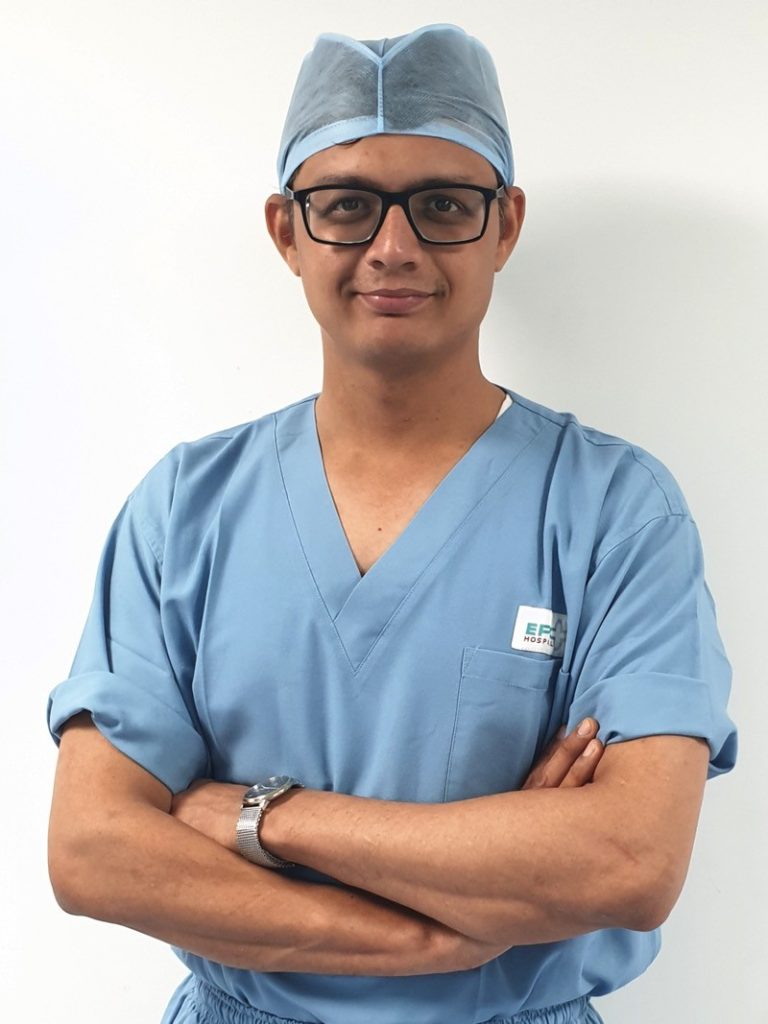
Meet Dr. Karnav Panchal
Dr. Karnav Panchal is a joint replacement surgeon in Ahmedabad with a fellowship in primary and revision arthroplasty from Bombay Hospital, Mumbai. He performs knee, hip, shoulder and elbow replacement, including complex revision surgery, and is Director of the Freedom Joint Care Centre at Epic Hospital, Ahmedabad. Patients are encouraged to ask questions and to take part in every decision, with surgery recommended only when it is the right step.
- M.B.B.S., M.S. (Ortho), Gold Medalist, B. J. Medical College, Ahmedabad
- Fellowship in advanced arthroscopy and sports medicine, St. Mary's Hospital, South Korea
- Fellowship in primary and revision arthroplasty, Bombay Hospital, Mumbai
- Director, Freedom Joint Care Centre, Epic Hospital, Ahmedabad
Treatments
How knee replacement is treated
The right option depends on your examination, imaging and goals. These are the main approaches Dr. Karnav Panchal discusses with patients.
Total knee replacement
Resurfacing all worn joint surfaces with metal and polyethylene components for advanced arthritis.
Partial (unicondylar) knee
Replacing only the worn compartment when arthritis is limited to one part of the knee.
Revision knee replacement
Redo surgery for a loose, infected, unstable or painful earlier knee replacement.
Rehabilitation planning
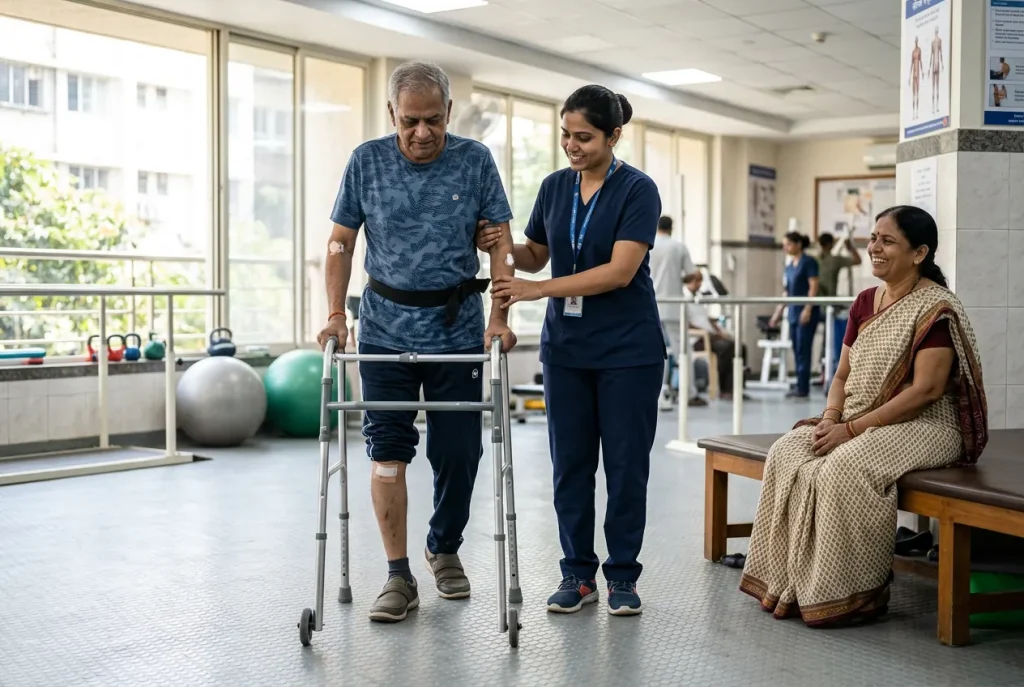
A step-by-step physiotherapy plan you can follow close to home between review visits.
Why choose
What to expect from your care
Non-surgical options first
Clear explanations of every option, including physiotherapy and activity changes, before surgery is discussed.
Two Ahmedabad hospitals
Consultations at Empire Hospital, Sola and Epic Multispecialty Hospital, Thaltej, in western Ahmedabad.
Research and teaching
Publications in international journals and faculty roles at regional and national conferences.
Time for your questions
Unhurried consultations so that you understand the diagnosis, the risks and the expected recovery.
At a glance
- Common reasons: Osteoarthritis, rheumatoid arthritis, post-injury arthritis
- Assessment: Examination, standing X-rays, blood tests and fitness check
- Hospital stay: Usually a few days, depending on recovery
- Recovery: Walking with support within days; most daily activities over 6–12 weeks
Knee Replacement Surgery: a patient guide
Who may need a knee replacement?
Knee replacement is usually considered when arthritis causes persistent pain, stiffness or deformity that limits walking and sleep, and when X-rays confirm significant joint damage. It is not decided on X-rays alone: how much the knee affects your life, and how well non-surgical care has worked, matter just as much.
What is tried before surgery?
Many people manage well for years with weight control, strengthening exercises, walking aids, pain relief and activity changes. Injections may help some patients for a period. Surgery is discussed when these measures no longer give acceptable relief.
Total or partial replacement?
A total knee replacement resurfaces the whole joint. A partial knee replacement replaces only one worn compartment and keeps more of your own knee, but suits only selected patients with arthritis limited to one area and intact ligaments. The choice depends on examination and imaging.
What happens on the day of surgery?
The operation is done under spinal or general anaesthesia. Worn bone and cartilage are removed and replaced with implants, which are aligned to balance the knee’s ligaments. Most patients start standing and walking with support within the first day or two, guided by a physiotherapist.
Recovery and rehabilitation
Physiotherapy is the key to a good result. Typical milestones, which vary between patients, are walking with a walker or stick in the first weeks, climbing stairs with support, and returning to most daily activities over 6–12 weeks. Swelling and some discomfort can continue for several months.
Patients from Mehsana
Planning your visit from Mehsana
Mehsana is close enough to Ahmedabad for a same-day visit. Dr. Karnav Panchal consults at two hospitals on the western side of Ahmedabad (Sola and Thaltej), which patients from Mehsana, Visnagar, Unjha, Kadi, Vijapur and Becharaji usually reach in around 1.5 to 2 hours by road.
Many families in and around Mehsana work in dairying, farming, trade and small industry, where squatting, kneeling, lifting and long hours on the feet are part of everyday work. Whatever the cause, the aim is the same: an accurate diagnosis, a clear explanation of the options, and a plan that fits your work and family life in Mehsana.
Most patients drive down the Ahmedabad–Mehsana highway or take a GSRTC bus; Mehsana is also a major railway junction on the Ahmedabad line. Both consultation locations are on the western side of Ahmedabad.
Please note: Dr. Karnav Panchal does not have a clinic in Mehsana. Consultations take place in Ahmedabad only. Outstation OPDs and camps, when held, are announced separately; see outstation OPDs and camps or call the clinic.
Before you travel
- Call +91 92657 01776 before leaving Mehsana to confirm the day and timing
- Bring all X-rays, MRI or CT scans, reports and operation notes
- Allow extra time in case new tests are needed on the same day
- Ask for a rehabilitation plan you can follow with a physiotherapist in Mehsana
Empire Hospital, Sola
4th Floor, Empire Doctor House, Opp. Kargil Petrol Pump, Near Kargil Cross Roads, Beside Amiraj Farm, Sola, Ahmedabad. Main hospital. Get directions.
Epic Multispecialty Hospital, Thaltej
Rajpath Rangoli Rd, behind Rajpath Club, off Sarkhej - Gandhinagar Highway, Bodakdev, Ahmedabad. Home of the Freedom Joint Care Centre. Get directions.
Appointments
Speak to the clinic team today
Call before travelling from Mehsana so the team can confirm the consultation day, timing and what to bring. Treatment is always discussed with you before any decision.
FAQs
Knee replacement: your questions answered
Am I too old for knee replacement?
Age alone is rarely the deciding factor. Overall health, heart and lung fitness, and how much the knee limits your life are more important. A pre-operative check helps decide whether surgery is safe.
How long does a knee replacement last?
Modern knee replacements commonly last many years, and for most patients well beyond a decade. Weight, activity level and implant position all influence how long it lasts.
Can both knees be replaced at the same time?
In selected fit patients, both knees can be replaced in one sitting or a few days apart. Many patients prefer one at a time. The choice depends on your health and is discussed individually.
Will I be able to sit cross-legged or squat?
Most patients can bend the knee well enough for daily activities, but deep squatting and sitting cross-legged on the floor are often limited and may not be advisable. Discuss your expectations before surgery.
Does Dr. Karnav Panchal have a clinic in Mehsana?
No. Dr. Karnav Panchal consults in Ahmedabad only, at Empire Hospital, Sola and Epic Multispecialty Hospital, Thaltej. Patients from Mehsana travel to one of these locations. Outstation OPDs or camps, when held, are announced separately; call +91 92657 01776 to ask.
What should I bring from Mehsana for my first visit?
Bring all X-rays, MRI or CT scans with their reports, any earlier operation notes, a list of current medicines and details of conditions such as diabetes or blood-thinner use. Wear loose clothing so the joint can be examined easily.
How many trips to Ahmedabad will knee replacement need?
It depends on your diagnosis and whether treatment is surgical. A first consultation is usually one visit; if surgery is planned, the team will explain the hospital stay and how many follow-up visits from Mehsana are likely, so you can plan travel in advance.
Related pages
Explore related care
- Orthopedic doctor near Mehsana
- Joint Replacement Surgeon near Mehsana
- Partial Knee Replacement near Mehsana
- Revision Knee Replacement near Mehsana
- Hip Replacement Surgery near Mehsana
- Guide for patients from North Gujarat
- Total knee replacement
- Knee replacement recovery: what to expect
- About Dr. Karnav Panchal
Ready to talk about your joint problem?
Call +91 92657 01776, send a WhatsApp message or request an appointment. Consultations take place at Empire Hospital, Sola and Epic Multispecialty Hospital, Thaltej, Ahmedabad.