
Awaiting medical review. This draft article is being reviewed by Dr. Karnav Panchal and is not yet indexed by search engines. It is general information, not medical advice.
Why does recovery take time?
Recovery takes time because the soft tissues around the knee need to heal, the swelling needs to settle and the muscles need to regain strength after surgery. The new joint surfaces work from the start, but your body has to adapt to them. The timelines below are typical ranges that vary between patients, not fixed targets.
In hospital: the first few days
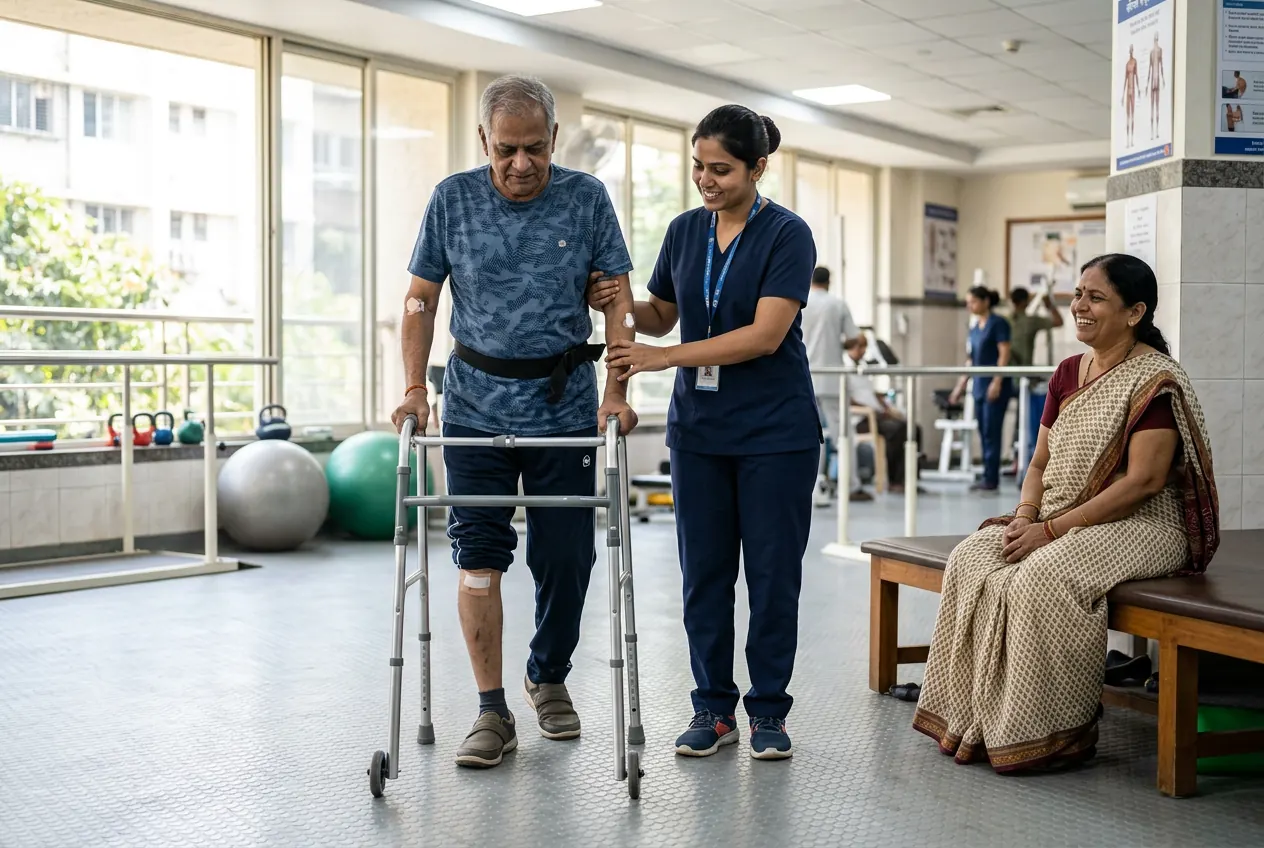
In hospital the focus is on pain control, safe walking and preventing complications. Physiotherapists usually help you stand and walk with a frame or crutches soon after surgery, often on the same or the next day if it is safe. You will practise bending and straightening the knee, getting in and out of bed and, where needed, using stairs.
Measures to reduce the risk of blood clots are started as advised by your surgical team. You go home once you can move safely, your pain is controlled and the wound looks healthy.
The first two weeks at home
The first two weeks are often the hardest. Swelling, bruising and stiffness are common, and sleep may be disturbed. Typical priorities include:
- Doing your prescribed exercises several times a day.
- Walking little and often, using your walking aid.
- Keeping the wound clean and dry until it is reviewed.
- Using ice and elevation for swelling, as advised.
- Taking pain relief as prescribed so that you can exercise.
Stitches or clips are usually checked or removed at a follow-up visit.
Around six weeks
By around six weeks, many people walk with less support, sometimes without any aid indoors, and manage most daily tasks. Knee bend usually improves steadily in this period. Returning to driving, desk work and short outings is often discussed around this time, but the right moment depends on your progress, which knee was operated on and your surgeon's advice.
Three months and beyond
At around three months, swelling is usually much less and many people feel the knee is part of normal life again, although some stiffness and warmth can persist. Walking longer distances, gentle cycling and swimming (once the wound has fully healed) are often encouraged.
Improvement in strength, comfort and confidence can continue for up to a year. Some people notice clicking or numbness of the skin on the outer side of the scar. These are common and usually harmless, but mention them at follow-up.
What affects how quickly you recover?
Several factors influence recovery:
- Fitness before surgery: stronger muscles before the operation often help afterwards.
- Other health conditions, such as diabetes, heart disease or obesity.
- Stiffness before surgery, which can make regaining movement slower.
- Commitment to physiotherapy, especially in the early weeks.
- Pain control, which allows you to exercise effectively.
- Home support and a safe environment to move around.
Recovery after a partial knee replacement may be quicker for some people, though this depends on the individual.
What does rehabilitation involve?
Rehabilitation is the most important part of recovery that you control. It usually combines exercises to restore bending and straightening, strengthening of the thigh and hip muscles, balance work and walking practice. Your physiotherapist will progress the programme as the knee settles.
- Straightening: getting the knee fully straight helps you walk normally. Avoid placing a pillow under the knee for long periods.
- Bending: regular, gentle bending exercises help prevent stiffness. Some discomfort is expected.
- Strength: quadriceps (front thigh) exercises help control the knee on stairs and slopes.
- Walking: increase distance gradually and reduce support as balance improves.
Short sessions spread through the day are often easier than one long session. If pain stops you exercising, speak to your team about adjusting your pain relief rather than skipping exercises.
Practical tips for home
Simple preparations can make the early weeks safer and easier:
- Clear trip hazards, such as loose rugs and wires, and keep frequently used items within reach.
- Use a firm chair with arms and, if possible, a raised toilet seat.
- Fit a grab rail or non-slip mat in the bathroom.
- Arrange help with shopping, cooking and travel for the first couple of weeks.
- Wear supportive footwear that is easy to put on.
- Eat a balanced diet, drink enough fluids and, if you smoke, try to stop, as smoking can slow healing.
Keep a note of your exercises and questions for each follow-up visit. Small improvements from week to week are a good sign, even if progress sometimes feels slow. It is common to have good days and bad days, and a busier day may be followed by more swelling. Pacing your activity helps.
When should you contact your surgical team or seek urgent care?
Contact your team if your knee bend stops improving or gets worse, as early treatment of stiffness is easier. Our page on stiff knee explains this problem.
When to seek urgent care: go to the nearest emergency department if you develop chest pain or sudden breathlessness, a painful swollen calf, fever with increasing redness or discharge from the wound, or sudden severe pain after a fall.
Discuss your situation with Dr. Karnav Panchal if you are preparing for knee replacement surgery and want a recovery plan suited to you.
Common questions
How long will I need a walking aid?
Many people use a frame or crutches for the first few weeks and then a stick for a while. The timing varies with balance, strength and confidence.
Is it normal for my knee to stay swollen for months?
Some swelling and warmth can last for several months after knee replacement. Sudden increase in swelling, redness or fever should be checked promptly.
When can I go back to work?
It depends on your job. People with desk-based work often return sooner than those whose work involves standing, lifting or travel. Discuss this with your surgeon.
Can I sit cross-legged or squat after knee replacement?
Deep bending varies between people and implants. Ask your surgeon which positions are advisable for your knee.
Related treatment page: Knee Replacement. To talk about your own symptoms, request a consultation.