
Knee cartilage
Knee Cartilage Treatment near Mehsana
Knee cartilage treatment near Mehsana for cartilage injuries and focal defects, with options chosen according to the size and site of the damage, your age and your activity. Dr. Karnav Panchal discusses individualised, evidence-based options.
- M.S. (Ortho), Gold Medalist
- Fellowships in South Korea & Mumbai
- 17 years' experience
Empire Hospital, Sola · Epic Hospital, Thaltej
M.S. (Ortho), Gold Medalist
B. J. Medical College, Ahmedabad
Fellowship, South Korea
St. Mary's Hospital, Daejeon
Fellowship, Arthroplasty
Bombay Hospital, Mumbai
2,500+ arthroscopies
Knee and shoulder
Your surgeon
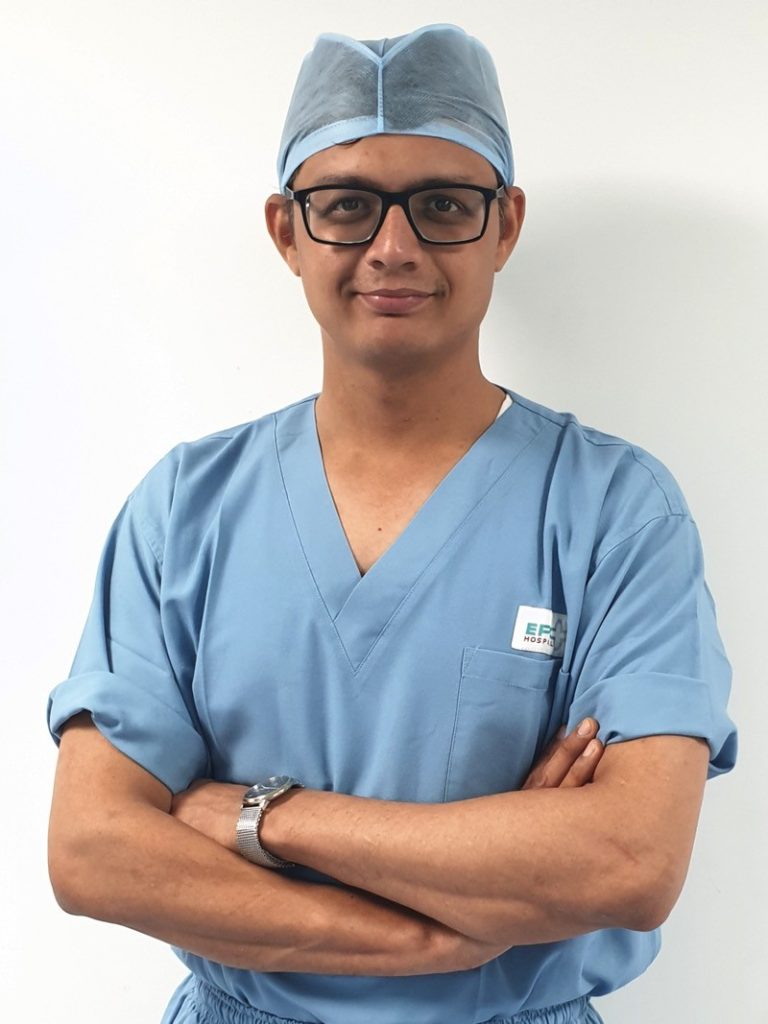
Meet Dr. Karnav Panchal
Dr. Karnav Panchal is a knee and arthroscopy surgeon in Ahmedabad. After his M.S. (Ortho) at B. J. Medical College, he trained in advanced arthroscopy and sports medicine at St. Mary’s Hospital, South Korea, and Hinduja Hospital, Mumbai, and in arthroplasty at Bombay Hospital. Patients are encouraged to ask questions and to take part in every decision, with surgery recommended only when it is the right step.
- M.B.B.S., M.S. (Ortho), Gold Medalist, B. J. Medical College, Ahmedabad
- Fellowship in advanced arthroscopy and sports medicine, St. Mary's Hospital, South Korea
- Fellowship in primary and revision arthroplasty, Bombay Hospital, Mumbai
- Director, Freedom Joint Care Centre, Epic Hospital, Ahmedabad
Treatments
How knee cartilage is treated
The right option depends on your examination, imaging and goals. These are the main approaches Dr. Karnav Panchal discusses with patients.
Rehabilitation and load management
Strengthening and activity changes for small or less symptomatic defects.
Arthroscopic cartilage procedures
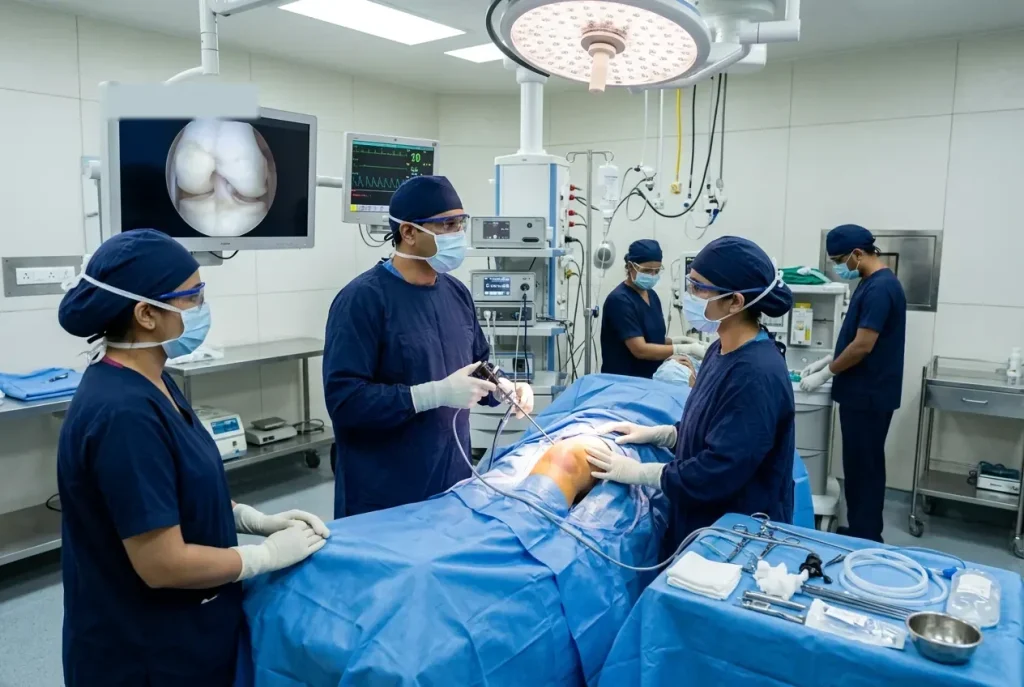
Keyhole techniques such as debridement or marrow stimulation for selected defects.
Alignment correction
Osteotomy to offload a damaged area when the leg alignment overloads it.
Why choose
What to expect from your care
Time for your questions
Unhurried consultations so that you understand the diagnosis, the risks and the expected recovery.
Fellowship-trained surgeon
Arthroscopy and sports medicine training in South Korea and Mumbai, and arthroplasty training at Bombay Hospital.
Arthroscopy experience
More than 2,500 knee and shoulder arthroscopies, with keyhole techniques used where they help.
Non-surgical options first
Clear explanations of every option, including physiotherapy and activity changes, before surgery is discussed.
At a glance
- Typical signs: Pain with activity, swelling, catching
- Assessment: Examination, X-rays and MRI
- Options: Rehabilitation, arthroscopic procedures, osteotomy
- Recovery: Often several months of protected loading after surgery
Read more: Knee cartilage injury treatment
Knee Cartilage Treatment: a patient guide
Cartilage damage is different from arthritis
A focal cartilage defect is a localised area of damage, often after an injury or kneecap dislocation, in an otherwise healthy knee. Arthritis is widespread wear. The two are treated differently.
Symptoms
Pain during or after activity, swelling, a feeling of catching and sometimes locking if a loose fragment is present. Symptoms can be similar to a meniscus tear, so an MRI is often helpful.
Treatment options
Small or less symptomatic defects may be managed with rehabilitation and load management. Selected defects can be treated arthroscopically, for example by smoothing unstable edges or stimulating repair tissue. Where poor alignment overloads the damaged area, an osteotomy may be considered.
Why individual planning matters
The best option depends on the size and depth of the defect, its location, your age, body weight, alignment and activity goals. Results vary, and realistic expectations are part of the discussion.
Patients from Mehsana
Planning your visit from Mehsana
Mehsana is close enough to Ahmedabad for a same-day visit. Dr. Karnav Panchal consults at two hospitals on the western side of Ahmedabad (Sola and Thaltej), which patients from Mehsana, Visnagar, Unjha, Kadi, Vijapur and Becharaji usually reach in around 1.5 to 2 hours by road.
Many families in and around Mehsana work in dairying, farming, trade and small industry, where squatting, kneeling, lifting and long hours on the feet are part of everyday work. Whatever the cause, the aim is the same: an accurate diagnosis, a clear explanation of the options, and a plan that fits your work and family life in Mehsana.
Most patients drive down the Ahmedabad–Mehsana highway or take a GSRTC bus; Mehsana is also a major railway junction on the Ahmedabad line. Both consultation locations are on the western side of Ahmedabad.
Please note: Dr. Karnav Panchal does not have a clinic in Mehsana. Consultations take place in Ahmedabad only. Outstation OPDs and camps, when held, are announced separately; see outstation OPDs and camps or call the clinic.
Before you travel
- Call +91 92657 01776 before leaving Mehsana to confirm the day and timing
- Bring all X-rays, MRI or CT scans, reports and operation notes
- Allow extra time in case new tests are needed on the same day
- Ask for a rehabilitation plan you can follow with a physiotherapist in Mehsana
Empire Hospital, Sola
4th Floor, Empire Doctor House, Opp. Kargil Petrol Pump, Near Kargil Cross Roads, Beside Amiraj Farm, Sola, Ahmedabad. Main hospital. Get directions.
Epic Multispecialty Hospital, Thaltej
Rajpath Rangoli Rd, behind Rajpath Club, off Sarkhej - Gandhinagar Highway, Bodakdev, Ahmedabad. Home of the Freedom Joint Care Centre. Get directions.
Appointments
Speak to the clinic team today
Call before travelling from Mehsana so the team can confirm the consultation day, timing and what to bring. Treatment is always discussed with you before any decision.
FAQs
Knee cartilage treatment: your questions answered
Can knee cartilage grow back?
Adult cartilage has very limited ability to heal. Some procedures stimulate repair tissue, which can help symptoms, but it is not identical to the original cartilage.
Do I need an MRI for cartilage damage?
MRI is usually the best scan to show cartilage defects, their size and associated injuries.
Is cartilage damage the same as arthritis?
No. A focal defect is a localised area of damage, while arthritis is more widespread wear. Treatment differs.
How long is recovery after cartilage surgery?
Often several months, with a period of protected weight-bearing followed by gradual strengthening.
Does Dr. Karnav Panchal have a clinic in Mehsana?
No. Dr. Karnav Panchal consults in Ahmedabad only, at Empire Hospital, Sola and Epic Multispecialty Hospital, Thaltej. Patients from Mehsana travel to one of these locations. Outstation OPDs or camps, when held, are announced separately; call +91 92657 01776 to ask.
Can I continue physiotherapy in Mehsana after knee cartilage treatment?
Often, yes. Many patients do supervised physiotherapy closer to home in Mehsana and return to Ahmedabad for review visits. Ask for your rehabilitation milestones in writing so your local physiotherapist can follow the same plan.
What should I bring from Mehsana for my first visit?
Bring all X-rays, MRI or CT scans with their reports, any earlier operation notes, a list of current medicines and details of conditions such as diabetes or blood-thinner use. Wear loose clothing so the joint can be examined easily.
Related pages
Explore related care
Ready to talk about your knee problem?
Call +91 92657 01776, send a WhatsApp message or request an appointment. Consultations take place at Empire Hospital, Sola and Epic Multispecialty Hospital, Thaltej, Ahmedabad.