
Shoulder tendon injuries
Rotator Cuff Tear Treatment near Mehsana
Rotator cuff tear treatment near Mehsana, from physiotherapy and pain relief to arthroscopic repair when needed. Dr. Karnav Panchal, who has published research on rotator cuff tears, assesses the tear and explains which approach suits your shoulder.
- M.S. (Ortho), Gold Medalist
- Fellowships in South Korea & Mumbai
- 17 years' experience
Empire Hospital, Sola · Epic Hospital, Thaltej
M.S. (Ortho), Gold Medalist
B. J. Medical College, Ahmedabad
Fellowship, South Korea
St. Mary's Hospital, Daejeon
Fellowship, Arthroplasty
Bombay Hospital, Mumbai
2,500+ arthroscopies
Knee and shoulder
Treatments
Treatment options for rotator cuff
The right option depends on your examination, imaging and goals. These are the main approaches Dr. Karnav Panchal discusses with patients.
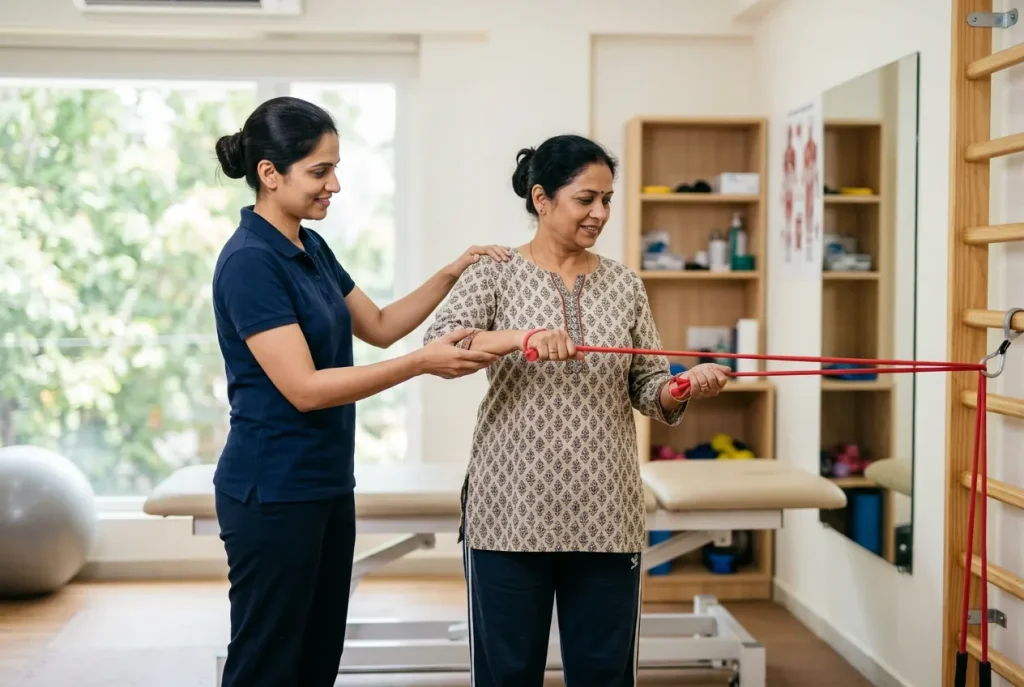
Rehabilitation
Strengthening the remaining tendons and shoulder blade muscles.
Arthroscopic cuff repair
Reattaching the torn tendon to bone through keyhole surgery.
Options for massive tears
Including reverse shoulder replacement when a tear cannot be repaired.
Your surgeon
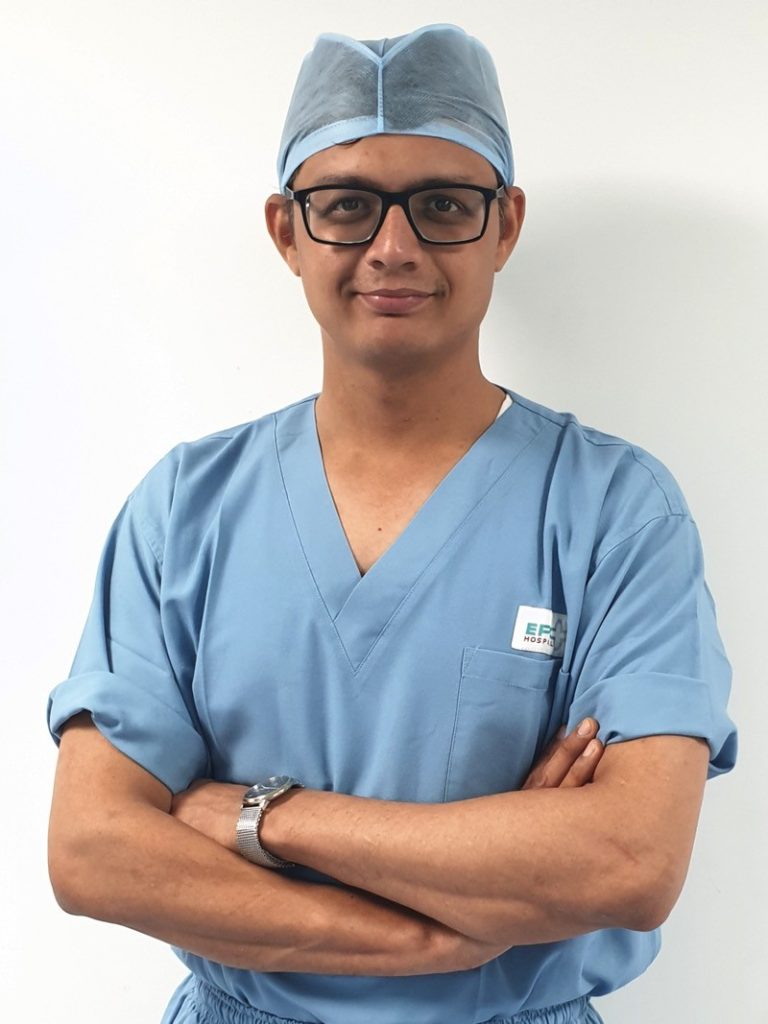
Meet Dr. Karnav Panchal
Dr. Karnav Panchal completed a six-month fellowship at St. Mary’s Hospital, Daejeon, South Korea, focused on shoulder and knee arthroscopy, and has published research on rotator cuff tears. He treats shoulder injuries and arthritis, from physiotherapy-led care to arthroscopic repair and shoulder replacement. Every plan starts with a careful examination and a review of your scans, and every option is explained with its benefits, risks and expected recovery.
- M.B.B.S., M.S. (Ortho), Gold Medalist, B. J. Medical College, Ahmedabad
- Fellowship in advanced arthroscopy and sports medicine, St. Mary's Hospital, South Korea
- Fellowship in primary and revision arthroplasty, Bombay Hospital, Mumbai
- Director, Freedom Joint Care Centre, Epic Hospital, Ahmedabad
Why choose
Why choose Dr. Karnav Panchal?
Research and teaching
Publications in international journals and faculty roles at regional and national conferences.
Time for your questions
Unhurried consultations so that you understand the diagnosis, the risks and the expected recovery.
Fellowship-trained surgeon
Arthroscopy and sports medicine training in South Korea and Mumbai, and arthroplasty training at Bombay Hospital.
Arthroscopy experience
More than 2,500 knee and shoulder arthroscopies, with keyhole techniques used where they help.
Understanding rotator cuff treatment
What is the rotator cuff?
The rotator cuff is a group of four tendons that keep the ball of the shoulder centred in its socket and help lift and rotate the arm. Tears can follow a fall or heavy lift, or develop gradually with age.
Symptoms
Pain on the outer side of the upper arm, night pain, pain and weakness when lifting the arm, and difficulty with tasks such as combing hair or reaching a shelf.
Non-surgical treatment
Many degenerative tears improve with physiotherapy, pain relief and activity changes. Injections may help settle pain enough to exercise.
When is repair advised?
Repair is often recommended for acute tears after an injury in active patients, and for tears that remain painful or weak despite rehabilitation. Repairing a tear before it enlarges and the muscle weakens gives the best chance of healing.
Arthroscopic repair and recovery
The torn tendon is reattached to the bone using anchors through keyhole surgery. A sling protects the repair for several weeks, followed by staged physiotherapy. Full strength often takes several months.
At a glance
- Typical signs: Night pain, pain lifting the arm, weakness
- Assessment: Examination, X-ray, ultrasound or MRI
- Options: Physiotherapy, injection, arthroscopic repair
- Recovery after repair: Sling for weeks; strengthening over months
Patients from Mehsana
Rotator cuff treatment for patients from Mehsana
If you live in Mehsana, the nearest place to see Dr. Karnav Panchal is western Ahmedabad, about 75 km away (around 1.5 to 2 hours by road). Consultations take place at Empire Hospital, Sola and Epic Multispecialty Hospital, Thaltej; there is no clinic in Mehsana itself.
Many families in and around Mehsana work in dairying, farming, trade and small industry, where squatting, kneeling, lifting and long hours on the feet are part of everyday work. Whatever the cause, the aim is the same: an accurate diagnosis, a clear explanation of the options, and a plan that fits your work and family life in Mehsana.
Most patients drive down the Ahmedabad–Mehsana highway or take a GSRTC bus; Mehsana is also a major railway junction on the Ahmedabad line. Both consultation locations are on the western side of Ahmedabad.
Please note: Dr. Karnav Panchal does not have a clinic in Mehsana. Consultations take place in Ahmedabad only. Outstation OPDs and camps, when held, are announced separately; see outstation OPDs and camps or call the clinic.
Before you travel
- Call +91 92657 01776 before leaving Mehsana to confirm the day and timing
- Bring all X-rays, MRI or CT scans, reports and operation notes
- Allow extra time in case new tests are needed on the same day
- Ask for a rehabilitation plan you can follow with a physiotherapist in Mehsana
Empire Hospital, Sola
4th Floor, Empire Doctor House, Opp. Kargil Petrol Pump, Near Kargil Cross Roads, Beside Amiraj Farm, Sola, Ahmedabad. Main hospital. Get directions.
Epic Multispecialty Hospital, Thaltej
Rajpath Rangoli Rd, behind Rajpath Club, off Sarkhej - Gandhinagar Highway, Bodakdev, Ahmedabad. Home of the Freedom Joint Care Centre. Get directions.
Appointments
Take the first step towards moving freely
Call before travelling from Mehsana so the team can confirm the consultation day, timing and what to bring. Treatment is always discussed with you before any decision.
FAQs
Questions patients ask
Can a rotator cuff tear heal without surgery?
A full-thickness tear does not usually heal on its own, but many people have good function and less pain with physiotherapy.
How long do I wear a sling after rotator cuff repair?
Usually several weeks, depending on the size of the tear and the quality of the repair.
When can I return to work after rotator cuff surgery?
Desk work may be possible within a few weeks; heavy manual work often needs several months.
Is rotator cuff repair done by keyhole surgery?
Yes, most repairs are performed arthroscopically through small incisions.
Does Dr. Karnav Panchal have a clinic in Mehsana?
No. Dr. Karnav Panchal consults in Ahmedabad only, at Empire Hospital, Sola and Epic Multispecialty Hospital, Thaltej. Patients from Mehsana travel to one of these locations. Outstation OPDs or camps, when held, are announced separately; call +91 92657 01776 to ask.
Can I continue physiotherapy in Mehsana after rotator cuff treatment?
Often, yes. Many patients do supervised physiotherapy closer to home in Mehsana and return to Ahmedabad for review visits. Ask for your rehabilitation milestones in writing so your local physiotherapist can follow the same plan.
What should I bring from Mehsana for my first visit?
Bring all X-rays, MRI or CT scans with their reports, any earlier operation notes, a list of current medicines and details of conditions such as diabetes or blood-thinner use. Wear loose clothing so the joint can be examined easily.
Related pages
Explore related care
- Orthopedic doctor near Mehsana
- Shoulder Specialist near Mehsana for Shoulder Pain and Injuries
- Shoulder Dislocation Treatment near Mehsana
- Frozen Shoulder Treatment near Mehsana
- SLAP Tear Treatment near Mehsana
- Guide for patients from North Gujarat
- Rotator cuff tear treatment
- Shoulder pain: common causes and treatment
- About Dr. Karnav Panchal
Ready to talk about your shoulder problem?
Call +91 92657 01776, send a WhatsApp message or request an appointment. Consultations take place at Empire Hospital, Sola and Epic Multispecialty Hospital, Thaltej, Ahmedabad.