
Overview
Ahmedabad areas such as Satellite, Thaltej, Gota, Ghatlodia, Bodakdev, Bopal, Naroda, Nikol, Naranpura, Ellis Bridge, Prahlad Nagar, Vastrapur, and Chandkheda host top orthopedic specialists and hospitals offering advanced knee replacement procedures, including partial and total knee replacement, robotic-assisted knee replacement, and revision knee replacement.
This blog will guide you through knee replacement treatment in Ahmedabad/Gujarat, including causes, symptoms, treatment options, surgical techniques, recovery, and tips for choosing the right surgeon and hospital.
What is Knee Replacement Treatment?
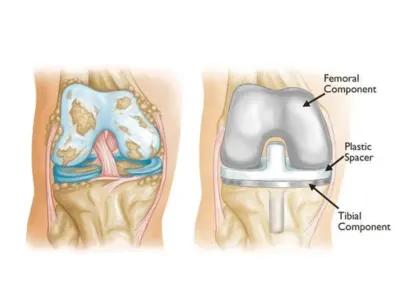
Knee replacement treatment involves restoring or replacing the damaged knee joint to relieve pain, improve mobility, and correct deformities. This treatment is typically recommended for:
- Patients with severe arthritis (osteoarthritis or rheumatoid arthritis)
- Knee injuries causing chronic pain or instability
- Malalignment or deformity of the knee
- Failed conservative treatments such as physiotherapy, medications, or injections
Knee replacement can be total or partial, depending on the extent of damage.
Causes Requiring Knee Replacement
- Osteoarthritis – age-related cartilage wear and tear
- Rheumatoid arthritis – inflammation causing joint damage
- Traumatic knee injuries – fractures or ligament tears
- Knee deformities – bowlegs or knock-knees
- Failed previous knee surgeries
Symptoms Indicating Knee Replacement
- Persistent knee pain during rest or movement
- Swelling, stiffness, or tenderness around the knee
- Difficulty walking, climbing stairs, or standing for long periods
- Locking, grinding, or instability in the knee joint
- Limited range of motion affecting daily activities
Non-Surgical Knee Replacement Treatment Options
- Before surgery, conservative treatments are often tried: Physiotherapy – strengthens muscles and improves mobility Pain relief medications – anti-inflammatory drugs to manage pain Injections – corticosteroids for inflammation or hyaluronic acid for lubrication Lifestyle modifications – weight management and low-impact exercise Knee braces – to support and stabilize the joint
- Physiotherapy – strengthens muscles and improves mobility
- Pain relief medications – anti-inflammatory drugs to manage pain
- Injections – corticosteroids for inflammation or hyaluronic acid for lubrication
- Lifestyle modifications – weight management and low-impact exercise
- Knee braces – to support and stabilize the joint
Surgical Knee Replacement Options
When non-surgical treatments fail, surgical knee replacement treatment is recommended. Top hospitals in Ahmedabad and Gujarat offer advanced surgical techniques:
1. Total Knee Replacement (TKR)
Replaces the entire knee joint with a prosthetic implant to relieve pain and restore mobility.
2. Partial Knee Replacement (PKR)
Replaces only the damaged compartment of the knee while preserving healthy bone and ligaments.
3. Robotic-Assisted Knee Replacement
Uses robotic guidance for precise implant placement, better alignment, and faster recovery.
4. Revision Knee Replacement
Performed if previous knee replacement fails, due to implant loosening, wear, or infection.
Recovery After Knee Replacement Treatment
Recovery depends on the type of procedure and patient health:
- Hospital stay: 3–7 days on average
- Physiotherapy: Begins immediately to restore mobility and strengthen muscles
- Weight-bearing: Gradual, often with assistance from walkers or crutches
- Full recovery: Usually 3–6 months for normal activities; 6–12 months for sports or heavy activity
- Follow-up: Regular check-ups to monitor implant function and prevent complications
Choosing the Right Surgeon & Hospital in Gujarat
- Selecting an experienced orthopedic surgeon is crucial for successful knee replacement treatment: Experienced Orthopedic Surgeon: Expertise in knee replacement, arthroscopy, and robotic-assisted procedures Advanced Hospital Facilities: Equipped with modern OT, physiotherapy, imaging, and post-op care Rehabilitation Programs: Structured physiotherapy for faster recovery Patient Reviews & Success Rates: Hospitals with high patient satisfaction and documented results Location & Accessibility: Top centers are available in Ahmedabad areas like Satellite, Thaltej, Gota, Bodakdev, Bopal, Naroda, Naranpura, Nikol, Prahlad Nagar, Ellis Bridge, Chandkheda, Vastrapur and across Gujarat (Surat, Vadodara, Rajkot, Gandhinagar)
- Experienced Orthopedic Surgeon: Expertise in knee replacement, arthroscopy, and robotic-assisted procedures
- Advanced Hospital Facilities: Equipped with modern OT, physiotherapy, imaging, and post-op care
- Rehabilitation Programs: Structured physiotherapy for faster recovery
- Patient Reviews & Success Rates: Hospitals with high patient satisfaction and documented results
- Location & Accessibility: Top centers are available in Ahmedabad areas like Satellite, Thaltej, Gota, Bodakdev, Bopal, Naroda, Naranpura, Nikol, Prahlad Nagar, Ellis Bridge, Chandkheda, Vastrapur and across Gujarat (Surat, Vadodara, Rajkot, Gandhinagar)
Benefits of Knee Replacement Treatment
- Relief from chronic knee pain
- Improved mobility and knee function
- Corrected knee deformities and misalignment
- Ability to perform daily activities and low-impact sports
- Long-term prevention of arthritis progression
Preventive Measures After Knee Replacement
- Follow physiotherapy protocols strictly
- Avoid high-impact activities initially
- Maintain a healthy weight to reduce stress on the joint
- Use walking aids until recommended by the doctor
- Attend regular follow-ups for monitoring implant health
FAQs – Knee Replacement Treatment in Ahmedabad & Gujarat
What is knee replacement treatment?
Knee replacement treatment involves replacing or repairing a damaged knee joint to relieve pain, improve mobility, and restore function.
Who is eligible for knee replacement treatment in Ahmedabad/Gujarat?
Patients with severe arthritis, knee injuries, joint deformities, or chronic knee pain that does not respond to medications or physiotherapy are ideal candidates.
What types of knee replacement surgeries are available?
The main types include total knee replacement (TKR), partial knee replacement (PKR), robotic-assisted knee replacement, and revision knee replacement.
How long is the recovery after knee replacement treatment?
Recovery typically takes 3–6 months for normal activities, with full recovery for high-impact activities or sports around 6–12 months, depending on the procedure and physiotherapy.
Is knee replacement treatment painful?
Pain is controlled using anesthesia during surgery and post-operative pain management. Most patients experience significant pain relief after recovery.
Can I resume my daily activities after knee replacement?
Yes. With proper physiotherapy and rehabilitation, patients can walk, climb stairs, and perform daily activities comfortably.
What are the risks associated with knee replacement treatment?
Risks include infection, blood clots, stiffness, or implant loosening, but choosing an experienced surgeon and advanced hospital minimizes these risks.
How do I choose the best knee replacement surgeon in Ahmedabad/Gujarat?
Look for surgeons with extensive experience in knee arthroplasty, robotic-assisted procedures, and high patient satisfaction, along with hospitals offering modern OT, physiotherapy, and post-op care.
Which areas in Ahmedabad have top knee replacement hospitals?
Ahmedabad areas with top hospitals include Satellite, Thaltej, Gota, Bodakdev, Bopal, Naroda, Naranpura, Nikol, Prahlad Nagar, Ellis Bridge, Vastrapur, and Chandkheda, with experienced orthopedic surgeons.
Can knee replacement treatment prevent further arthritis progression?
Yes. Knee replacement treatment restores joint alignment and function, reducing further degeneration and improving long-term joint health.
Conclusion
Knee replacement treatment in Ahmedabad and Gujarat is a reliable solution for patients suffering from chronic knee pain and limited mobility. Early consultation with an experienced orthopedic surgeon ensures accurate diagnosis, effective treatment, and a smoother recovery process.
If you are experiencing knee pain, stiffness, or limited movement, consult a knee replacement specialist in Ahmedabad or Gujarat today to take the first step toward a pain-free, active life.
Related treatment page: Knee Replacement Treatment In Ahmedabad/Gujarat. To talk about your own symptoms, request a consultation.