
Overview
Leading orthopedic centers in Ahmedabad, including Satellite, Thaltej, Gota, Ghatlodia, Bodakdev, Bopal, Naroda, Nikol, Naranpura, Ellis Bridge, Prahlad Nagar, Vastrapur, and Chandkheda, provide advanced arthroscopic and minimally invasive frozen shoulder surgeries.
This blog explores causes, symptoms, surgical procedures, recovery, and tips for choosing the right surgeon and hospital in Ahmedabad/Gujarat.
Understanding Reverse Shoulder Replacement Surgery
Reverse shoulder replacement surgery (also called reverse total shoulder arthroplasty ) is a specialized orthopedic procedure designed for patients with severe shoulder arthritis combined with rotator cuff tears or shoulder joint degeneration. Unlike conventional shoulder replacement, this surgery reverses the anatomy of the shoulder joint, placing the ball component on the shoulder blade and the socket on the arm bone.
This innovative approach improves shoulder function, reduces pain, and restores mobility in patients with complex shoulder conditions.
What Is Shoulder Instability After Reverse Shoulder Replacement?
- Shoulder instability after reverse shoulder replacement occurs when the replaced joint becomes loose or dislocated, affecting the patient’s shoulder function and causing pain. While reverse shoulder arthroplasty is highly effective, complications like instability can occur in certain cases. Common symptoms of instability include: Sudden shoulder dislocation or subluxation Pain during movement or at rest Weakness in lifting or rotating the arm Limited range of motion
- Sudden shoulder dislocation or subluxation
- Pain during movement or at rest
- Weakness in lifting or rotating the arm
- Limited range of motion
Causes of Instability After Reverse Shoulder Replacement
Dr. Karnav Panchal highlighted several key factors leading to shoulder instability post-surgery:
- Improper Component Positioning: Incorrect placement of the prosthetic ball and socket can compromise stability.
- Soft Tissue Imbalance: Weak or damaged rotator cuff muscles and ligaments can fail to stabilize the joint.
- Patient Factors: Severe bone loss, trauma, or high physical activity levels can increase the risk.
- Surgical Technique: Precision and experience during surgery are critical to prevent complications.
- Post-Operative Rehabilitation: Poor adherence to physiotherapy protocols may lead to instability and stiffness.
Prevention and Management Strategies
Preventing instability after reverse shoulder replacement involves careful planning, surgical expertise, and patient education. Dr. Panchal emphasized:
- Accurate Preoperative Planning: Imaging studies like X-rays and CT scans help determine the correct size and placement of prosthetic components.
- Meticulous Surgical Technique: Experienced surgeons ensure proper alignment and soft tissue balance.
- Strengthening Exercises: Gradual post-operative physiotherapy helps restore shoulder stability.
- Patient Education: Patients must follow activity restrictions and exercise routines as advised by their surgeon.
- Revision Surgery (if needed): In cases of persistent instability, corrective procedures may be necessary to reposition components or repair soft tissues.
Why Choose Dr. Karnav Panchal for Reverse Shoulder Replacement?
Dr. Karnav Panchal is a renowned orthopedic surgeon specializing in shoulder replacement and complex joint surgeries. His expertise ensures:
- Safe and precise reverse shoulder replacement procedures
- Personalized care and rehabilitation plans
- Minimization of post-operative complications like instability
- Latest surgical techniques with advanced prosthetic systems
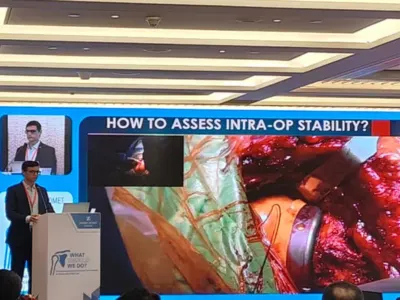
Key Takeaways from the Talk at Hotel Hyatt Regency
During his session, Dr. Panchal shared valuable insights for both medical professionals and patients:
- Understanding the anatomy and biomechanics of reverse shoulder arthroplasty is crucial.
- Prevention of instability starts in the preoperative planning stage.
- Experienced surgical hands significantly reduce the risk of post-surgical complications.
- Early detection and management of instability lead to better long-term outcomes.
- Education and physiotherapy play a major role in patient recovery.
Conclusion
Instability after reverse shoulder replacement surgery is a serious but manageable complication. With the right surgical expertise, meticulous planning, and structured rehabilitation, patients can regain shoulder function and live pain-free.
Dr. Karnav Panchal’s talk at Hotel Hyatt Regency, Ahmedabad served as an important platform to spread awareness among healthcare professionals and patients alike, ensuring better outcomes and improved quality of life for shoulder replacement patients.
If you are experiencing shoulder pain, instability, or considering reverse shoulder replacement surgery, consult Dr. Karnav Panchal, one of the leading shoulder replacement surgeons in Ahmedabad, for expert guidance and care.
Related treatment page: Instability After Reverse Shoulder Replacement Surgery: Insi. To talk about your own symptoms, request a consultation.